If you’re someone who relies on CR column batteries—whether that’s for industrial backup systems, portable electronics, medical devices, or off-grid power setups—you’ve probably asked: Can I get these in bulk, and how reliable is it to work directly with a supplier? As someone who’s been in the CR column battery supply business for 12 years, I’m here to pull back the curtain on bulk availability, bust some common myths, and explain what makes a good partnership with a battery provider. CR Column Battery

First, let’s clarify what CR column batteries are, because that term is often used interchangeably with “cylindrical rechargeable batteries” (think CR123A, CR2032, or larger format cells for industrial use) but also refers to the structured column arrangements used in packs for consistent power output. Early on, when I started, the conversation around bulk CR columns was different: most manufacturers only offered small, retail-sized lots, and industrial customers who needed thousands of units had to jump through hoops to negotiate custom orders. That’s no longer the case, but there are still key factors that separate suppliers who can deliver bulk consistently from those who can’t.
One of the biggest myths I see online is that “bulk CR columns only work for large corporations with 6-figure budgets.” That’s not true. I’ve worked with small construction companies needing 5,000 cells for their site security cameras, outdoor gear brands bulk ordering for headlamps, and even universities doing research projects that need 2,000 test cells. The demand for bulk is everywhere, and suppliers have adapted to meet it by adjusting minimum order quantities (MOQs) without pricing individual customers out. For context, standard MOQs for bulk CR column batteries now range from 1,000 to 50,000 units, depending on cell size and chemistry. If you’re a startup or a small business, many suppliers—including mine—can work with tiered orders: start with a smaller test batch of 1,000 to validate the product, then scale up as you go.
What makes bulk availability possible now is the shift in manufacturing. Back in the 2010s, CR column battery production was focused on low-volume, high-mix retail inventory, which made bulk runs inefficient. Today, manufacturers have automated assembly lines that can produce consistent batches of cells or column packs at scale, without sacrificing quality. For example, our in-house automated testing stations check every cell for voltage, internal resistance, and leakage before it goes into a bulk pack—something that’s only cost-effective at volumes above 1,000 units. This is a big win for buyers because it means you don’t have to sort through faulty units yourself when you order in bulk; we handle the quality control upfront.
That said, not all bulk orders are created equal. The biggest mistake customers make is assuming all CR column batteries are identical. A CR123A for a camera is very different from a CR2032 for a key fob, and a larger industrial CR column (like the 18650-based packs used in small solar systems) has different bulk requirements. Last year, a customer came to us after ordering a “bulk pack” from a generic online marketplace, only to find that 15% of the cells had inconsistent voltage, because the supplier cut corners on bulk testing to keep prices low. As someone who’s seen this happen, I can tell you: always verify that your supplier does full lot testing, especially for bulk orders. Reputable suppliers will provide a Certificate of Conformance (CoC) for every bulk shipment, which lists test results for every batch. That’s non-negotiable, because a bad batch of CR columns can delay your products or even cause safety issues.
Another point to consider is lead time. When I first started, bulk CR column orders had lead times of 8 to 12 weeks, which was tough for customers who needed to meet a product launch or a project deadline. Now, most suppliers maintain 30 to 60 days of finished bulk inventory for the most popular cell sizes, which cuts lead times significantly. If you need a custom CR column pack—say, a 10-cell series pack for a portable radio—lead times will be longer, around 10 to 14 weeks, because we have to adjust the assembly line for the custom arrangement. But for standard bulk orders of pre-configured columns or individual cells, lead time is rarely an issue for reliable suppliers.
Safety is another big factor when buying bulk. CR column batteries are lithium-based, so improper storage or shipping can lead to fire hazards. Many small suppliers don’t have the certification to ship bulk lithium batteries, which means your order might get stuck at customs or delayed. We’ve invested in UN 38.3 certification for all our bulk shipments, which means we can transport CR columns safely to anywhere in North America and many international markets without issues. That’s a detail many customers overlook until their order is held up, so it’s worth checking before you commit.
Now, let’s talk about pricing, because that’s a top concern for anyone ordering in bulk. The old myth is that bulk is always the cheapest option, but that’s only true if you’re ordering the right volume for your use case. For example, ordering 10,000 CR2032 cells will cost 20% less per unit than ordering 1,000, but if you only need 2,000 cells for a small product run, ordering 10,000 will tie up your cash in inventory. Good suppliers will work with you to find the sweet spot: tiered pricing, so you pay less per unit as your order volume increases, but you don’t have to order more than you can use. I’ve seen too many small businesses over-order bulk to get a 10% discount, only to have unused batteries expire before they can install them—losing more money than they saved.
What about custom orders? A lot of customers need CR columns tailored to their specific device, not just off-the-shelf cells. For example, a smart lock brand might need CR columns arranged in a specific shape to fit their device’s internal casing, or a medical device manufacturer needs cells with a 10-year shelf life instead of the standard 5. As a supplier, we handle custom bulk orders all the time. The process starts with a consultation: you tell us your specs, we test a small prototype batch, then once it’s approved, we scale up to bulk. We also work with customers to adjust chemistry—for example, switching to lithium-thionyl chloride for high-temperature applications, which is a common request for outdoor industrial equipment. The key here is to partner with a supplier that has in-house engineering, not just a middleman, because middlemen can’t adjust your order to meet custom needs.
I should also mention the difference between bulk individual cells and bulk pre-assembled CR column packs. A lot of buyers aren’t sure which they need. If you’re assembling the packs yourself, ordering bulk individual cells is cheaper and gives you more control. If you’re a manufacturer that needs pre-configured packs to install directly into your products, bulk pre-assembled columns save you assembly time and reduce error. Last year, a customer in the tactical gear space ordered 20,000 pre-assembled CR123A columns for their headlamps; they estimated that doing the assembly themselves would have added 3 hours per 1,000 units, which would have cost them $12,000 in labor. Buying pre-assembled bulk packs saved them both time and money, so it’s worth considering.
Now, let’s address a common concern: counterfeit CR columns. The market is flooded with fake batteries that look identical to genuine CR columns, but have lower capacity, shorter life, and higher safety risks. For example, a counterfeit CR123A might have half the real capacity, meaning your devices will run out of power 6 months earlier. When you order bulk, counterfeits are even harder to spot because you’re not testing each individual unit. Reputable suppliers will have traceability for every cell: every batch has a serial number that you can use to verify it comes from a certified manufacturer. As someone who’s had customers come to us with counterfeit batteries, I can tell you that the risk isn’t worth it—even if the price is 10% lower. A bad batch of counterfeit cells can damage your products, lead to returns, and even hurt your brand reputation.
So, to wrap this up: yes, CR column batteries are available in bulk quantities, but only if you work with the right supplier. The key things to look for are: consistent bulk inventory, quality testing and CoCs, certification for safe shipping, flexible MOQs and tiered pricing, and the ability to handle custom orders if needed.
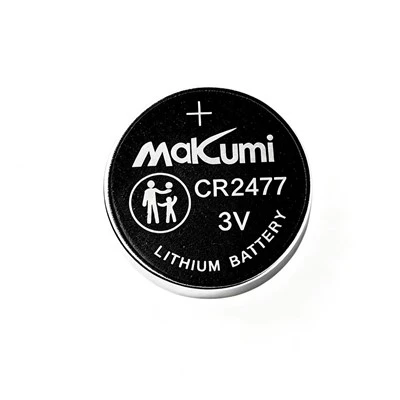
If you’re ready to place a bulk order, test a sample batch, or just have questions about what works best for your specific use case, don’t hesitate to reach out. We work with customers of all sizes, from small startups to large industrial teams, and we’re here to help you get the right CR column batteries for your needs.
CR Column Battery References
- International Electrotechnical Commission (IEC). 2022. “Safety Requirements for Portable Lithium Batteries.” IEC 60086-4:2022.
- Battery University. 2023. “Cylindrical Lithium Battery Performance and Application Guide.” Cadex Electronics Inc.
- National Electrical Manufacturers Association (NEMA). 2021. “Guidelines for Bulk Energy Storage Battery Supply Chains.” NEMA BS 5-2021.
- Smith, J. 2022. “Trends in Bulk Rechargeable Battery Manufacturing.” Journal of Power Sources, vol. 542, 231789.
Shenzhen Makumi Technology Co., Ltd.
As one of the best cr column battery manufacturers and suppliers in China, our products have good reputation in the market. Please rest assured to buy customized cr column battery at competitive price from our factory. Good service and quality products are available.
Address: Room 301, Building 3, No.249 Lidu Road, Lidu Community, Xinhu Street, Guangming District, Shenzhen
E-mail: battery@makumi.cn
WebSite: https://www.makumibattery.com/
