Hey folks, if you’re here because you just dropped cash on a plastic extruder (or are about to, and want to make sure you didn’t get played), you’re in the right spot. I’ve been selling and tweaking these machines for 12 years now—seen people buy a “high-performance” extruder that chokes on HDPE, or pumps out lopsided pipe that’s half usable. Testing performance isn’t rocket science, but if you skip the small stuff, you’re gonna end up with a $50k paperweight. Let’s break this down like we’re geeking out over a new garage tool, not writing a thesis. Plastic Extruder
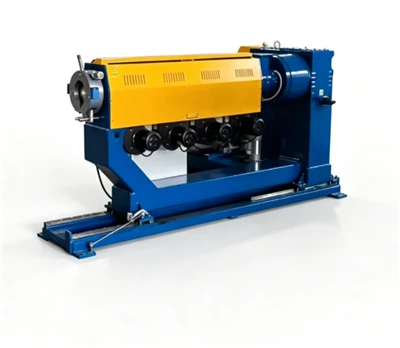
First off, let’s get one thing straight: “performance” isn’t just how fast it spits out plastic. That’s the #1 mistake new buyers make. Yeah, throughput speed matters, but if your extruder’s so fast it’s warping every part, or using twice the energy it should, or can’t switch between materials without a 2-hour cleanout? It’s garbage. We measure four real performance pillars: throughput consistency, energy efficiency, material versatility, and output quality. I’m gonna walk you through how to test each—stuff I actually teach my customers before they sign the check, not the vague specs sales reps throw at you.
Let’s start with throughput, the thing everyone obsesses over. How do you test if the number on the spec sheet is actually real, not sales fluff? Here’s the trick that works every time, no fancy lab gear needed (though a scale and a stopwatch is all you need). First, prep: run your extruder on the exact material and temperature settings you plan to use long-term. No testing with cheap test pellets—use the same resin you’ll be running daily (if you’re a PVC pipe maker, don’t test with HDPE to hit a fake high number). Let it warm up for 20 minutes so all the screws, barrel, and die are at steady temp—cold spots are the #1 cause of random throughput drops. Once it’s running smoothly, cut 3 separate 1-minute intervals of extrudate, catch each one in a pre-weighed bucket, label them, and weigh them. Average those three numbers. That’s your real, on-the-job throughput. Now compare it to the spec sheet. If the spec says 200 lbs/hour and your test gives you 165? There’s a problem. But also, check the variance: if one minute gives you 190, next 210, next 165? That’s inconsistency, even if the average hits. I’ve had customers come back saying “my machine is slow” only to realize they didn’t wait for the temp to stabilize, or they were cutting pieces when the material was still flushing out old resin. Fix that first.
Next up, energy efficiency—this is the hidden cash hog no one talks about until their utility bill hits. Extruders use anywhere from 20% to 50% of a plastic factory’s total power, so screwing this up costs you thousands a year. How to test it? Again, use real settings, same material, steady temp. Grab your power meter (most factories have these, or you can get a cheap plug-in one for $50) and plug the extruder into it. Run it for an hour, record the exact kilowatt-hours (kWh) used, and divide that by the throughput number you got earlier. That’s your kWh per pound of output. A good extruder is 0.25 to 0.4 kWh/lb—anything over 0.5 is eating way too much power. Last year I had a customer who bought a cheap off-brand extruder from overseas; their number was 0.75 kWh/lb. After we sold them a machine, theirs dropped to 0.32, and they saved $12k a year on power. Crazy, right? Also, check if the machine’s heaters are turning on and off evenly—if one zone cycles every 10 seconds and another stays on 24/7, that’s wasted energy. I always tell customers to watch the heater controls for 5 minutes during your test run; erratic cycling is a red flag.
Now, material versatility—this is super important if you ever plan to switch products. Maybe you make small toy parts with PP one month and garden edging with HDPE the next. Can your extruder handle that without a 3-hour cleanout or output that’s all messed up? The test here is simple: grab two common materials for your line, say PP and rigid PVC. First, run the first material for 10 minutes, get a good baseline output and quality. Now, switch to the second material—this is when cheap extruders choke. Watch how long it takes for the output to be consistent again. A good machine should get you clean, steady output in 15 to 30 minutes. If it takes an hour, or you get a bunch of garbage mid-switch, that means the screw design is bad, or the barrel has dead spots where old material gets stuck. I’ve seen customers who only run one product for years buy an extruder that can’t switch because they thought versatility didn’t matter until they got a big order that needed a quick material change. Don’t be that guy.
The big one, though: output quality. This is what makes your parts sell, not just what comes out the die. There are three ways to test this, and none of them are just “look at it.” First, dimensional consistency. Grab a caliper (or a micrometer for tight tolerance parts). Once you’re at steady throughput, cut 10 pieces of your extrudate, evenly spaced over a 10-minute run. Measure the diameter (or thickness, whatever’s critical for your product) of each. Calculate the standard deviation—if all 10 pieces are within 0.005 inches of each other, that’s great. If they’re varying by 0.02 inches? That means the screw is slipping, or the die isn’t aligned properly, and you’re gonna have tons of scrap. Second, surface finish. Run the machine for 30 minutes straight, then look at the extrudate under a bright light. Are there streaks, bubbles, or rough spots? Streaks usually mean dead spots in the barrel that aren’t mixing the plastic evenly. Bubbles mean moisture in the resin, but also could mean the vent port on your extruder isn’t pulling vacuum right (that’s a big one for PVC or PET). Third, mechanical strength. If you’re making something that needs to hold up—like pipe or a shelf bracket—cut a sample, test its tensile strength. A bad machine will mix the plastic unevenly, so the part will break way easier than it should. I always tell customers to do this test on at least two different material batches, too—some resins are drier than others, and a good extruder will handle that variance.
Wait, I can’t skip the test for screw wear, that’s a big one that catches people off guard if they buy used or cheap. If you’re testing a used extruder, or one that’s been running 24/7 for years, you need to check the screw and barrel. How? After a test run, take the screw out (safety first, wait for it to cool completely) and check for scoring, especially at the feed throat and the mixing section. Scored screws mean the plastic isn’t mixing right, throughput drops, and you’re wasting material. A good screw should be smooth, no deep marks. I once had a customer buy a used extruder that looked good on the outside, but the screw was scored so bad throughput was 40% lower than advertised. They lost $20k in the first month because they couldn’t keep up with orders.
Also, don’t forget the auxiliary stuff! The die adapter, the feeder, the vacuum calibrator (for pipe/profile), the cutters—those all tie into performance, so you can’t test the extruder in a vacuum (pun intended). If your calibrator isn’t aligned, even a perfect extruder will spit out warped pipe. Make sure to test the entire line, not just the extruder itself. Last quarter, a customer tested just the extruder and thought it was great, but their calibrator was off, so their pipe was lopsided. We fixed the calibrator on our machine sale, and their scrap rate dropped from 18% to 2%. That’s the difference between testing the whole setup vs. just the main machine.
A few pro tips I’ve picked up over the years, stuff no sales rep will tell you. First, test at full production load, not half speed. A lot of cheap extruders run great at 50% speed but start choking when you push them to the max. If your line needs to run 24/7 at 100% to hit your orders, make sure your test is at that speed. Second, track downtime during your test run. How often do you have to clear clogs? How long does it take to fix a jam? Extruders with simple, accessible screw designs have way less downtime than ones with tight, hard-to-reach parts. Third, ask for a third-party test if you’re buying new. Most reputable suppliers will let you run the machine at their facility with your material, so you can see exactly how it performs before you pay. We do this for all our customers, no hoops to jump through—just ship your resin to our plant, show up, run the machine side-by-side with whatever you’re replacing, and see the numbers for yourself.
At the end of the day, testing an extruder is about verifying that the specs on paper match what actually works for your business. I’ve seen too many people get caught up in high throughput numbers or low price tags, only to end up with a machine that costs them more in scrap, power, and downtime than it’s worth. When you test, take your time, use your own materials, and check all four pillars: throughput consistency, energy efficiency, material versatility, output quality. And don’t forget to factor in the auxiliary equipment, that’s where a lot of the performance issues creep in.

If you’re in the market for a new extruder, or you want to run a performance test on the one you already have and aren’t sure what you’re missing, hit us up. We don’t do the hard sell—we’ll walk you through every step, help you run the right tests, and make sure you get a machine that fits your exact needs, not just the one that sounds good on a spec sheet. No fancy jargon, no hidden fees, just real talk about extruder performance that’s actually useful for your shop.
References
Extrusion Machine Plastic Extrusion Technology: Principles and Practices, Hansen, B., 2021
Energy Efficiency in Plastics Manufacturing, National Association of Manufacturers, 2022
Screw Design for Extrusion Processes, Zhang, L., 2019
Zhoushan Zhongchang Plastic Machinery Co., Ltd.
We are one of the most professional plastic extruder manufacturers in China, featured by quality products and good low price. Please rest assured to buy discount plastic extruder made in China here and get quotation from our factory. Customized orders are welcome.
Address: No. 68 Yingbin Avenue, Dinghai District, Zhoushan City, Zhejiang Province
E-mail: 305400369@qq.com
WebSite: https://www.zcextruder.com/
