If you’ve ever stared at a 3/8 inch bolt in your hand, holding a drill bit that’s either too big it won’t fit the hole or too small it won’t seat right—hey, we’ve all been there. As a drill bits supplier who’s fielded 100+ questions about bolt and drill bit pairs last month alone, let’s cut through the confusion and get this right once and for all. No stuffy engineering jargon, just what works, what doesn’t, and why picking the right size matters more than you think. Drill Bits
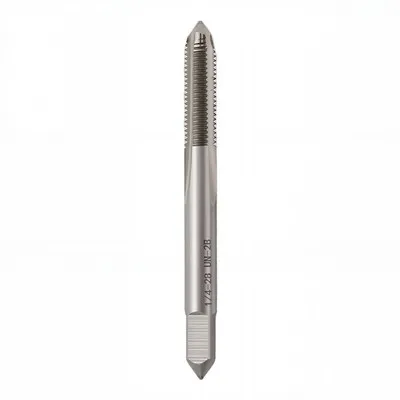
First, let’s break down what we’re actually dealing with here. A 3/8 inch bolt’s “size” is the nominal diameter, right? That’s the thickest part of the bolt shank, not including threads (wait, yeah, threads make the actual diameter a tiny bit bigger, but for standard bolts, the 3/8 inch number is the baseline). Now, when you’re drilling a hole for this bolt—whether you’re mounting a deck rail, hanging a heavy shelf, or fixing a fence post—you’ve got two main goals: it has to thread cleanly onto the bolt, and the connection has to hold up without stripping or wobbling. That’s where drill bit size comes in, and it’s not one-size-fits-all.
Let’s start with the most common scenario: drilling a clearance hole. This is the hole you make in your material (wood, metal, whatever) so the bolt shank passes through easily. If you’re using a standard UNC (Unified National Coarse) bolt, which is the one 90% of people grab at the hardware store, the go-to drill bit is 5/16 inch. Wait, hold on—let me do the math in my head, that’s right: 3/8 minus 5/16 is 1/16, so there’s a 1/16 inch gap around the bolt. That’s enough for the shank to slide through without forcing, but not so much the bolt wiggles loose. But if you’re working with finer threads, like UNF (Unified National Fine), you’ll want a slightly different size? No, wait—for clearance holes, it’s still pretty consistent for 3/8 inch bolts, but let’s clarify: 5/16 is for clearance, but if you’re tapping a hole (drilling then threading a hole directly into a piece of metal, so the bolt is part of the material), that’s a different drill bit. Oh, right, tapping’s a big one people mess up. Let’s not skip that because we’ve had so many guys call us panicking because they drilled a 3/8 inch hole and their tap won’t fit.
When tapping a hole for a 3/8 UNC bolt, the drill bit size is 5/16 inch too? Wait, no—wait, UNC bolts have 16 threads per inch, so the formula for tap drill size is nominal diameter minus threads per inch. Let’s test that: 3/8 is 0.375 inches, minus 1/16 (since 1/16 is 0.0625, and 16 threads per inch means each thread is 1/16 inch apart) gives 0.3125, which is exactly 5/16. Yep, that checks out. For UNF, which is 24 threads per inch, it’s 0.375 minus 1/24, which is roughly 0.333 inches—so 21/64 inch. Wait, that’s a little tricky because 21/64 is a less common size, but it’s what works for the finer threads so the tap can cut proper threads. A lot of guys just grab 5/16 for UNF too and wonder why their threads strip later—we see that mistake all the time.
Now, let’s talk about when you shouldn’t just follow the number. If you’re drilling into softwood, like pine or cedar, you can maybe get away with a slightly bigger hole? No, wait—actually, no, if you want the bolt to hold, the gap should stay around 1/16. Softwood is porous, so if the hole’s too big, the bolt will pull out easier. If you’re drilling into hardwood, like oak or maple, same rule, but you might need a pilot hole first for the drill bit? No, wait, pilot holes are for when you’re drilling a larger hole, but for 3/8 inch, the clearance hole is straightforward. Wait, what about metal? If you’re drilling through steel, you’ll want a sharp bit—duh, but also, the 5/16 inch size still applies, just make sure your bit’s a high-speed steel (HSS) one, not a wood bit, because wood bits will dull super fast on metal. That’s another mistake: using a spade bit for metal, which is way too aggressive and will wander, making your hole off-size.
Wait, let’s throw in a real example from a customer last week. A guy was building a backyard deck, was using 3/8 inch lag bolts (wait, lag bolts are a type of bolt, right? Their diameter is nominal too) for the ledger board (the board that attaches to the house). He came to us panicking because he’d drilled 3/8 inch holes, and the lag bolt wouldn’t go all the way in. Turned out, he used a wood bit that was worn down, so the actual hole was smaller than 3/8, and he forced the bolt, stripping the threads. We sent him a sharp 5/16 inch HSS drill bit, and a tip: for lag bolts, you actually need a pilot hole in the end grain of the wood to prevent splitting, but the clearance hole in the ledger is still 5/16. That’s the kind of on-the-job stuff we see every day, so it’s not just about the number—it’s about the tool you’re using and what material you’re drilling.
Another common mix-up: fractional vs. numbered drill bits. A lot of people don’t know that drill bits come in three size systems: fractional (like 5/16), numbered (1 to 60), and lettered (A to Z). For 3/8 inch UNC tap drill, the number is F, which is 0.3125 inches—exactly 5/16, so that’s easy to mix up. If you’re using numbered bits, that’s one to keep in mind. For UNF tap drill, the number is Q, which is 0.332 inches, so that’s the 21/64 we talked about earlier. If you grab a numbered bit that’s too small, like E, you’ll end up with a hole that’s too tight, and the tap will break. Too big, like G, and the threads won’t grab, so the bolt will spin.
Let’s also address when someone might use a different size, just to cover all bases. If you’re using a bolt with a washer, do you need a bigger hole? No, the washer goes on the outside of the material, so the hole still needs to be the same 5/16 inch so the shank can slide through. Wait, unless you’re using a countersink—if you want the bolt head to sit flush, you drill a countersink hole with a bigger bit for the head, but the shank hole is still 5/16. That’s a separate step, not changing the clearance size. What about heavy-duty applications, like structural steel? The AISC (American Institute of Steel Construction) has specific guidelines for bolt holes, and for 3/8 inch bolts, the standard clearance hole is still 5/16, but if you need a precision hole (like for a structural connection), you might use a 3/8 inch reamer, but that’s way more advanced, and most DIYers don’t need that.
Wait, let’s talk about why this matters so much. If you use a drill bit that’s too small (like 11/32 inch, which is 0.34375 inches, smaller than 5/16 which is 0.3125), you’ll force the bolt onto the threads, which can strip the bolt or crack the material. That’s a pain—you have to remove the bolt, fill the hole, start over. If you use a bit that’s too big (like 3/8 inch itself), the bolt will have too much play, so the connection wobbles. For a deck, that means loose rails, which are a safety hazard. For a shelf, that means it might sag over time, ruining your TV or books. So getting this right isn’t just about convenience—it’s about safety and not wasting time or materials.
As a drill bits supplier, we get questions like this all the time, so let’s make a quick cheat sheet you can grab right now for 3/8 inch bolts:
- Clearance hole (for shank to pass through): 5/16 inch (fractional), Number F, Letter F
- Tap hole (for UNC, threading into material): 5/16 inch, Number F, Letter F
- Tap hole (for UNF, finer threads): 21/64 inch, Number Q, Letter Q
- Pro tip: Always use a sharp bit. A dull bit will drill a smaller hole than its marked size, which is the #1 reason people end up with bolts that won’t fit. We have a huge selection of sharp, high-quality drill bits for every material, from wood to metal to concrete, so you don’t have to guess.
Wait, concrete? Oh right, a lot of people use 3/8 inch concrete bolts (like wedge anchors or sleeve anchors). For those, the drill bit size is different—you need a carbide-tipped masonry bit, and for 3/8 inch concrete anchor, the drill bit is also 5/16 inch? Wait, let’s confirm: concrete anchors have a sleeve that expands, so the hole size matches the shank, so yeah, 5/16 inch. But you can’t use a wood or metal bit for concrete—you need a carbide-tipped one, otherwise the bit will shatter, and you’ll be back at the hardware store wasting time. That’s another common mistake, so if you’re working with concrete, make sure your drill bit is marked for masonry.
Let’s wrap this up with a real customer story, because that’s how we talk. A few weeks back, a carpenter came in yelling because he’d drilled 3/8 inch holes for his deck bolts, and 12 of them wouldn’t fit. We asked him what bit he used—turns out he used a 3/8 inch spade bit, which is meant for rough holes, not precision, so it was slightly oversize. We gave him a 5/16 inch high-speed steel twist bit, and he was able to finish his job in half the time he thought he’d lost. That’s the kind of fix we love to help with, right? Because it’s not just selling a drill bit—it’s making your job easier.
If you’re working on a project right now and aren’t sure which drill bit you need for your 3/8 inch bolt, don’t guess. We’ve got experts on hand to help you pick the right bit for your material, project type, and budget. Whether you need a wood bit, metal bit, masonry bit, or anything in between, we’ve got you covered. Reach out to our team to chat through your needs, get a quick recommendation, and grab the bits you need to get the job done right the first time. Don’t waste time messing up holes or forcing bolts—let’s get this sorted together.
Thread Milling Cutter References
- Machinery’s Handbook (31st ed.), Industrial Press, 2020
- American Institute of Steel Construction (AISC) Steel Construction Manual, 15th ed., 2017
- National Wood Flooring Association (NWFA) Installation Guidelines, 2021
Small Craftsman (Shandong) Machine & Tools Co., Ltd.
Small Craftsman (Shandong) Machine & Tools Co., Ltd. is one of the most experienced drill bits manufacturers and suppliers in China, also supports customized service with low price. Please feel free to buy bulk high quality drill bits in stock here from our factory. Contact us for pricelist.
Address: No.9 Quanxin Rd., Sishui Economic Developing Zone, Jining, Shandong, China.
E-mail: 6196@ocutchina.com
WebSite: https://www.ocutooling.com/
