If you’re deep into the power distribution space, you’ve probably heard “modular power switchgear” thrown around, but what does it actually mean beyond just another industry buzzword? As a power switchgear supplier that’s worked with everything from small retail shops to large industrial plants, I get questions about this all the time, and it’s way more than just a fancy upgrade to the stuff you’ve seen a hundred times. Let’s break it down like I would with a client who’s new to this—no jargon, just real talk about what it is, why it matters, and why it’s become a go-to for so many operations these days. Power Switchgear
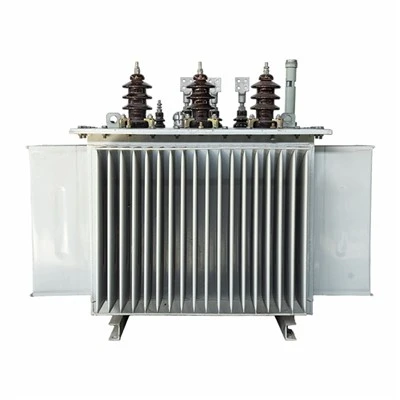
First, let’s start with the basics: switchgear in general. If you think of your power system as a house’s electrical wiring, switchgear is the central panel that controls, protects, and routes power to every part of the space. It’s got circuit breakers, disconnect switches, fuses, meters, and all the gear that keeps power from shorting out or causing fires. Traditional switchgear used to be built as one big, fixed unit—you’d order an entire enclosure, and once it was installed, you pretty much couldn’t change it without tearing the whole thing out. That works for some static setups, but most businesses these days are growing, moving, or shifting their power needs all the time, and that fixed design was a pain point.
Modular power switchgear solves that by splitting the system into separate, interchangeable “modules.” Each module does one specific job: a circuit protection module, a metering module, a busbar module that carries power between parts, a communication module for monitoring, whatever you need. They’re built to fit together like Lego bricks, so you can add, remove, or swap modules without overhauling the whole enclosure. It’s not just smaller units, either—even large-scale industrial modular switchgear follows the same logic, just scaled up.
Let me give a real example from a client I worked with last year. It was a food processing plant that had a sudden surge in demand after they expanded their packaging line. A few years back, they’d installed traditional switchgear, and adding a new circuit to power the extra machines would’ve meant shutting down their whole facility for two days to rewire the big enclosure. With modular switchgear, they just ordered a 200A circuit protection module, swapped it into a spare slot in their existing enclosure, and were up and running in 4 hours—no full shutdown, no mess, no extra cost for a whole new panel. That’s the kind of difference modular design makes.
Now, why is this such a big deal right now? A lot of industries are shifting to more flexible operations: hybrid workspaces that need to add charging stations for EVs or new office power, warehouses expanding their racking and requiring more lighting, data centers that have to scale power capacity on the fly. Traditional switchgear can’t keep up with that pace. Modular also fixes a lot of common headaches with older switchgear: maintenance is easier, too. If a circuit breaker goes bad, you don’t have to drain the whole system to replace it—you pull the faulty module, slide a new one in, and you’re back online. For facilities where downtime costs thousands an hour, that’s not just convenient—it’s a make-or-break feature.
I know some folks out there worry that “modular” means it’s less reliable than built-in switchgear, and that’s a fair question. Years ago, some cheap modular units cut corners on fit and material, so they had loose connections or didn’t hold up to heavy industrial use. But today’s modular power switchgear is tested to the same strict safety standards as traditional gear, often more so. Most reputable suppliers (including us) use high-grade copper for busbars, precision-machined module connectors to eliminate slack, and each module undergoes individual testing before it even reaches the enclosure. It’s not a compromise on safety—it’s a smarter way to build switchgear.
Another underrated perk: space savings. Traditional switchgear enclosures are big because they have to fit every component all at once, even if you don’t need it right now. Modular lets you start with a smaller enclosure, add modules as you grow, so you’re not wasting floor space on empty slots you’ll never use until 3 years from now. For older buildings where every square foot costs money, that’s a huge win. We recently did a project in a downtown retail mall where the electrical room was tiny—modular switchgear fit 30% more power capacity than their old traditional unit in the same footprint, no construction needed to expand the room.
Now, let’s talk about what’s inside those modules, because that’s where the actual functionality lives. A typical modular switchgear setup has a few core components that make it work:
First, the busbar system. That’s the backbone that carries power through the enclosure, and in modular units, it’s designed with removable sections so adding a new module doesn’t force you to run new big cables. Then there’s the protection modules: circuit breakers (either manual or digital), residual current devices to prevent electric shock, arc fault protection to stop fires before they start. These are the parts that trip if there’s an overload, and modern modular ones often have smart features—you can monitor their status from a phone or computer, get alerts if a breaker is nearing its limit, even remote trigger a trip if you need to.
Then there’s the metering and communication modules. Back in the day, you’d have to pull physical meters to check power usage, which was a hassle. Now, modular switchgear can include modules that track energy consumption in real time, log data for maintenance, and integrate with a building’s management system. For businesses that want to cut energy costs or comply with sustainability rules, that’s game-changing—you can see exactly which machines are drawing too much power and adjust accordingly.
I’ll be honest, modular switchgear isn’t the right fit for every job. If you have a small, static setup that’s never going to change—like a tiny retail shop with a single electrical panel—traditional switchgear might be cheaper upfront. But for anything that might expand, shift, or need upgrades in the next 5-10 years, modular almost always works out better long-term. The lower downtime, easier maintenance, and flexibility to adapt mean you don’t have to replace your entire switchgear every time your needs change.
A lot of people also mix up modular switchgear with other types, like compact switchgear. Compact is just smaller, but it’s still a fixed, one-unit design. Modular is all about interchangeability. It’s the difference between a laptop you can add a memory stick to and one where you have to send it back to the manufacturer to upgrade the storage. Same idea, just for power.
Over the years, we’ve seen modular switchgear become the default for a lot of sectors: manufacturing, data centers, retail chains, healthcare facilities where downtime can put patients at risk, even schools that need to add new tech labs. Every time a client tells us they’ve outgrown their switchgear in 2 years instead of the 20 they expected, we know we gave them the right solution.

If you’re reading this and thinking, “This sounds like something we could use,” don’t hesitate to reach out. Whether you’re dealing with unexpected power surges, needing to expand your operation without a big construction project, or just tired of the hassle of fixing switchgear every time something goes wrong, we can walk you through what works for your space, your budget, and your long-term plans. No pressure, just straight answers on what will actually keep your power running smoothly.
AC Voltage Transformer References
- International Electrotechnical Commission. IEC 62271-200: High-voltage switchgear and controlgear assemblies – Part 200: AC metal-enclosed switchgear and controlgear for rated voltages above 1 kV and up to and including 52 kV
- IEEE Industry Applications Society. 2021. Modular Switchgear: Trends, Benefits, and Applications in Industrial Power Systems
- National Electrical Manufacturers Association. NEMA Standards Publication SG-6: Low-Voltage Modular Switchgear Assemblies
- U.S. Department of Energy. 2022. Energy Efficiency Improvements in Modular Power Distribution Systems for Commercial and Industrial Facilities
Jiangshan Da’an Electric Power Equipment Co., Ltd.
As one of the most professional power switchgear manufacturers and suppliers in China, we have world-leading production equipment and strong manufacturing capabilities. Please feel free to buy high quality power switchgear made in China here from our factory.
Address: No.7 Longfei Road, Shuangta Sub-district, Jiangshan City, Zhejiang Province, P.R. China
E-mail: 1614665601@qq.com
WebSite: https://www.daan-electrical.com/
