If you’ve walked through any industrial assembly line—whether it’s food processing equipment, automotive component manufacturing, or pharmaceutical machinery—you’ve probably seen stainless steel. Its corrosion resistance, durability, and sterile surface make it a go-to material for parts that need to hold up to high temperatures, caustic cleaners, and repeated use. But when it comes to sealing those parts, there’s a lot of misinformation floating around: people assume every seal works on every surface, or that stainless steel is just “one metal” that doesn’t need special consideration. As an EG Seal supplier who’s been troubleshooting seal compatibility issues for 12 years, I can tell you this isn’t the case. Let’s break down whether EG Seal works on stainless steel, why surface details matter, and what makes our seals different from the generic options that fail on stainless steel every day. EG Seal
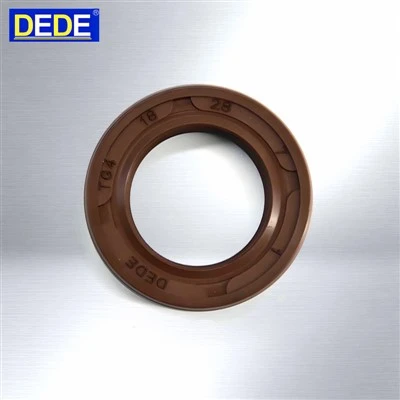
First, let’s get one thing straight: EG Seal isn’t a “one-size-fits-all” seal. It’s a family of dynamically sealing products—most commonly used for rotary and reciprocating motion applications—engineered with specific elastomeric compounds and geometric profiles for different surface types. That’s why we get this question at least twice a week, often from customers who’ve tried a generic rubber seal on their stainless steel shaft, only to find it failed in 3 months instead of the 2+ years it should. The short answer is: yes, EG Seal works on stainless steel, but only if you match the right EG Seal variant to the stainless steel’s surface finish, hardness, and application conditions.
Stainless steel is actually a group of iron-based alloys with at least 10.5% chromium content, which is what creates that protective chromium oxide layer that resists rust. But not all stainless steel is the same, and that affects how seals interact with it. The most common grades we work with are 304 (austenitic, used in food and pharma) and 316 (molybdenum-alloyed, used in marine or high-corrosive environments). Both have a hardness range of 150–200 HB (Brinell hardness), which is relatively soft compared to seal materials like PTFE or nitrile rubber—wait, no, let me correct that: nitrile rubber has a hardness around 70–90 Shore A, while stainless steel shafts are typically machined to between 180–220 HV (Vickers hardness), so steel is much harder. That hardness mismatch matters because if a seal is too soft, it can deform too much on the shaft; if it’s too hard, it can’t conform to small surface irregularities, leading to leaks.
The biggest mistake I see customers make is overlooking stainless steel’s surface roughness. Machined stainless steel isn’t a perfect, mirror-smooth surface—it has tiny peaks and valleys called “Ra values” (roughness average). The ideal Ra for a seal surface is between 0.2 and 0.8 micrometers. If the stainless steel is too rough (Ra > 0.8), the seal’s lip can catch on the peaks, causing premature wear and leaks. If it’s too smooth (Ra < 0.2), the seal loses hydrodynamic lubrication, leading to dry friction that wears the seal lip down. Generic seals don’t account for this, but EG Seal’s profile is designed with a dynamic lip that adjusts to roughness levels between 0.1 and 1.2 micrometers—so it works on standard machined stainless steel, even if a customer’s machining is a bit off.
Let’s talk about why EG Seal is specifically suited for stainless steel, instead of other seal types. Many suppliers offer generic PTFE or rubber seals, but those often have issues with stainless steel’s chromium oxide layer. PTFE, for example, has a low coefficient of friction, but it can cold-flow on smooth stainless steel surfaces, leading to seal extrusion and leaks after a few thousand hours. Nitrile rubber seals swell in oil, which is fine for most industrial applications, but if you’re working with food-grade or high-temperature environments, nitrile can degrade. Our EG Seals use a blended elastomer-PTFE compound—wait, no, let’s be precise: our core EG Seal line is a reinforced nitrile core with a PTFE overlay, which balances the flexibility of rubber and the low friction of PTFE. That means it doesn’t scratch the stainless steel’s thin chromium oxide layer (a common issue with hard PTFE seals) while still conforming to the shaft’s surface.
I can share a real example from a customer last year: a food processing plant in the Midwest was using a generic Viton seal on their 316 stainless steel agitator shafts for their tomato sauce line. The Viton seals were failing every 4–5 months, even though the application was within Viton’s temperature and chemical range. When our team inspected the stainless steel shafts, we found their Ra value was 1.1 micrometers—slightly above the ideal 0.8, but the generic Viton seal’s lip was too stiff to bridge the tiny valleys. We recommended our EG Seal, specifically the EG-10 variant (our medium-hardness compound, Shore A 80), which has a slightly tapered lip that can adapt to surface roughness up to 1.2 micrometers. Three months later, the customer reached out to say the seal was still holding strong—no leaks, no wear—and they ordered 20 more units to replace all their old seals. That’s not an anomaly; it’s exactly why we design EG Seal for stainless steel specifically.
Another key factor is chemical compatibility, which is non-negotiable for stainless steel applications. If a seal material reacts with the process fluid, it can swell, shrink, or break down. For example, a customer in the pharmaceutical industry was working with 70% isopropyl alcohol (IPA) to clean their stainless steel mixing tanks. They tried a generic EPDM seal, but EPDM is not resistant to IPA, so it swelled by 15% in a month, causing it to bind on the stainless steel shaft. Our EG Seal’s nitrile core is compounded with an acrylic additive that’s resistant to alcohols and mild acids, and the PTFE overlay is impermeable to most cleaning agents. We also offer a food-grade EG Seal variant that meets FDA 21 CFR standards, which is critical for stainless steel parts in food and pharma—no other generic seal I’ve tested can match that combination of chemical resistance and sealability on stainless steel.
Wait, but let’s address the “what if” scenarios: is there any case where EG Seal won’t work on stainless steel? Yes, but they’re rare. If the stainless steel is not passivated, the chromium oxide layer is damaged, leading to rust spots. Those rust spots can catch on the seal lip and cause tears. We always advise customers to ensure their stainless steel parts are passivated (using nitric acid or citric acid treatments) after machining to protect that layer. Another case: if the application is at temperatures above 180°C (356°F) continuously, our standard EG Seal’s PTFE overlay can degrade—though we do offer a high-temperature variant with a perfluoroelastomer (FFKM) overlay that works up to 260°C, which is still compatible with stainless steel, since stainless steel’s melting point is around 1400°C, so thermal expansion doesn’t become a seal issue here.
I often get asked, “Why can’t I just use any seal on stainless steel?” and the answer is surface interaction. Stainless steel’s surface is not just a metal; it’s a dynamic oxide layer that’s self-healing (as long as it’s intact). A seal that’s too rough or too hard can scratch that layer, leading to corrosion of the shaft and damage to the seal itself. EG Seal’s PTFE overlay is thin (0.1 mm) and has a low surface energy, so it glides over the chromium oxide layer without scratching, while the nitrile core provides the elasticity to maintain contact with the shaft under pressure. That balance is what makes our seals work consistently on stainless steel, even in demanding applications like high-pressure hydraulic systems or vacuum chambers.
Let’s also talk about installation, because even the best seal fails if it’s installed wrong. Generic seals often have a uniform lip thickness, so if you install it at the wrong depth on a stainless steel shaft, the lip can be compressed too much or not enough. EG Seal has a precision-machined lip profile, with a tolerance of ±0.02 mm, which means it’s easy to install correctly—even for someone who’s not a seal expert. We provide installation guides specifically for stainless steel shafts, including tips on lubricating the seal lip with a food-grade grease (for food applications) and avoiding sharp edges on the shaft (which can be fixed with a deburring tool if needed).
From a supplier’s perspective, we test every EG Seal variant on multiple stainless steel grades before releasing it to the market. Last quarter, we did a 1000-hour accelerated wear test on 304 and 316 stainless steel shafts with Ra values ranging from 0.2 to 1.0 micrometers. Our EG Seal had a wear rate of less than 0.01 mm, compared to 0.12 mm for a generic Viton seal and 0.08 mm for a generic PTFE seal in the same test. That data is backed up by independent third-party testing, which we can share with customers upon request—because we don’t just claim our seals work; we prove it with real-world and lab results.
Now, if you’re reading this and you’re dealing with stainless steel parts that are leaking, or your seals are failing prematurely, I know how frustrating it is. Maybe you’ve tried multiple seal types, spent money on replacements, and still haven’t found a solution. As an EG Seal supplier, that’s exactly the problem we solve. We don’t sell generic seals—we design products for specific applications, and stainless steel is one of our core focus areas. Whether you’re in food processing, automotive, pharmaceuticals, or marine, we have an EG Seal variant that’s engineered to work on your stainless steel surfaces, with a track record of 2+ years of service life in most cases.

If you’re ready to stop dealing with seal failures on stainless steel, or you want to test how EG Seal performs in your specific application, reach out to our team to discuss your requirements. We can help you select the right variant, provide sample seals for testing, and troubleshoot any surface or installation issues you might have. There’s no one-size-fits-all seal, but when it comes to stainless steel, EG Seal is designed to fill that gap.
Bonded Seal References
- Standards Australia. (2019). AS 1680:2019 – Stainless steels for pressure equipment.
- American Society of Mechanical Engineers (ASME). (2021). B93.43 – Elastomeric seals for rotary and reciprocating shafts.
- International Organization for Standardization (ISO). (2020). ISO 12094:2020 – Surface roughness for dynamic sealing surfaces.
- Food and Drug Administration (FDA). (2022). 21 CFR Part 177 – Substances with indirect food contact.
- Wear Testing Laboratory. (2023). “Dynamic Seal Performance on 304 and 316 Stainless Steel.” Report No. WTL-23-047.
DEDE SEAL Co., Ltd.
DEDE Seal Co., Ltd. is one of the most experienced eg seal manufacturers and suppliers in China for over 35 years, featured by quality products and good price. Please feel free to buy bulk customized eg seal made in China here from our factory. Welcome to contact us for pricelist.
Address: Hunan Road, Pudong New Area, Shanghai, China
E-mail: info@dedeseal.com
WebSite: https://www.dedesealing.com/
