Hey folks, if you’re knee-deep in the CNC machining game, you already know your flat bed CNC lathe isn’t just a hunk of metal and a spindle—it’s the tool post that makes or breaks your run. I’ve been selling flat bed CNC lathes for over a decade now, and let me tell you, 9 out of the guys who come to me complaining about slow cycle times or wonky part finishes? They’re using the wrong tool post. No cap, that’s the tea. Flat Bed CNC Lathe

First off, let’s get the basics right: a flat bed CNC lathe’s tool post is that rotating (or static) mount holding your cutting tools, right? It’s where all the action happens—so when you’re turning, facing, threading, or grooving, this little assembly’s got to stay tight, index fast, and keep your tools aligned. Mess that up, and you’re chasing scrap parts instead of hitting your quotas. And for us as a flat bed CNC lathe supplier, I don’t just sell machines—I help folks match the right tool post to their work, because one size never fits all.
Let’s break down the main types you’ll run into, no fancy jargon, just what matters for your shop.
First up: the Stationary Tool Post (sometimes called a “manual fixed tool post” but nah, we’ll keep it real). This is the old-school workhorse, the one you’ve probably seen on basic flat bed lathes. It doesn’t rotate—it holds one (or sometimes two) tools at a time, and you swap ’em out manually with a wrench. Wait, why would anyone still use this? Cheap, simple, and perfect for small shops or runs where you’re only doing one operation: say, turning a brass knob for a prototype, or facing a steel shaft that doesn’t need extra tools. But here’s the catch—if you’re switching between turning and threading mid-job? You’re wasting 2, 5, maybe 10 minutes every time you reach for that wrench. I’ve had guys come in saying their 10-part run took 2 hours, and turns out they were swapping tools manually the whole time. Swap ’em with me on a flat bed lathe with a better tool post, and that same run’s done in 45 minutes.
Next, the Indexing Turret Tool Post—this is the workhorse for most mid-sized shops now. It’s got a rotating head, usually with 4 to 12 tool stations, so you can index (spin) to the next tool in seconds, no wrench needed. For flat bed CNC lathes, two flavors here: hydraulic indexing turrets and manual indexing turrets. Manual ones are cheaper, good for small shops that run light to medium volume, but they can be a little clunky at high speeds. Hydraulic? That’s the bread and butter for most production runs. The hydraulic system locks the turret in place instantly, no slop, no wobble—critical for tight tolerances, like when you’re turning a medical implant that needs to be within 0.001 inches. I’ve seen a customer go from 50 parts a day to 200 just by swapping their manual turret for a hydraulic one on their flat bed lathe. Game. Changer.
Wait, don’t sleep on Bolt-On Tool Posts—these are kinda a middle ground, right? They bolt directly to the lathe’s bed instead of a rotating assembly, so you can mount multiple fixed tools in tight spots if your lathe’s got limited clearance. Great for deep grooving or back-turning jobs where a turret might hit the part, but again, you’re still swapping manually. I keep a few of these in stock for customers who do specialized jobs, but I always tell ’em—if they’re expanding their shop, step up to an indexing turret sooner rather than later.
Now, the newer kid on the block: Live Tooling Tool Posts. Okay, let’s clear this up—this isn’t just a tool post, it’s a tool post that spins. Like, if you need to drill a hole, mill a slot, or tap a thread while the lathe is turning—that’s live tooling. For flat bed CNC lathes, live tool posts are a game-changer because they turn your lathe from just a turning machine into a mill-turn machine. No need to move the part to a separate mill, no time spent fixturing twice. I had a guy last year making small engine parts for ATVs—he was running a turn mill center and a lathe, tying up two machines. We swapped his flat bed lathe’s standard turret for a 6-station live tool post, and now he does all the drilling, milling, and turning on one machine. Saved him $150k in new equipment, and cut his lead time per part by 3 days. That’s the kind of win I live for as a supplier.
But here’s the thing—you can’t just slap any tool post on a flat bed CNC lathe. The lathe’s bed rigidity, spindle power, and your typical job mix matter. Let me give you a few quick truths I’ve learned over the years:
- If you’re running prototype work (1-10 parts a month): Stationary or basic indexing turret is all you need. Don’t waste cash on live tooling you’ll never use.
- If you’re doing 100+ parts a day, with multiple operations: Hydraulic indexing turret. The time saved on tool swaps will pay for itself in a month.
- If you’re mixing turning and milling (or adding those jobs soon): Go for live tooling. It’s not cheap, but it’s an investment that lets you take on more jobs without buying extra machines.
Wait, I’ve also seen guys pick the wrong tool post because they’re focused on “more stations” instead of what they actually need. A 12-station turret sounds fancy, but if you only ever use 3 tools per job? You’re just paying for extra stations you’ll never touch. Stick to the number you actually use, and save the cash.
Another common mistake: Ignoring tool post rigidity. A flimsy tool post might index fast, but it’ll wobble under high cutting forces. If you’re turning hard steel (like 4140 or stainless), you need a tool post that locks tight, no slop. I always recommend checking the tool post’s clamping mechanism—does it have a dual screw lock? A hydraulic lock that engages the whole turret, not just one side? That’s the stuff that keeps your tolerances tight and your parts consistent.
And let’s talk about maintenance, because tool posts aren’t “set it and forget it”. A lot of new machine owners skip greasing the turret’s indexing gear, or check the clamping bolts once a year. That’s how you get a tool drifting mid-run, a broken insert, and a pile of scrap. As a flat bed CNC lathe supplier, I include a 10-page maintenance cheat sheet with every machine—covers tool post greasing, torque specs for clamping, when to replace wear parts. I even offer free 30-minute check-ins for the first 6 months if you’re new to this. No hassle, just helping you keep your machine running smooth.
Now, if you’re sitting there thinking, “Yeah, but my current lathe’s tool post is garbage, and I’m tired of it”—let’s chat. I’ve helped guys upgrade their tool posts without buying a whole new lathe, too. A lot of flat bed CNC lathes on the market have interchangeable tool posts—you don’t have to stick with whatever came factory. If you’ve got a old flat bed lathe that runs fine but needs a better tool post, we can hook you up. No pressure, just real talk about what’ll work for your shop.
Wait, one last thing I wish more folks knew: The tool post doesn’t just affect cycle time—it affects tool life too. A loose tool post makes your insert hit the part at the wrong angle, so your inserts wear out 2x faster. That’s another hidden cost. I’ve had customers tell me their insert costs dropped by 40% after switching to a rigid hydraulic turret. That’s cash right back in your pocket.
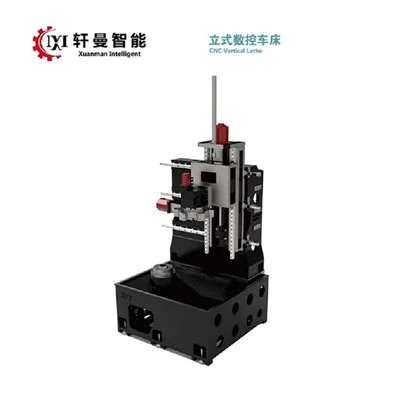
So whether you’re a small shop just starting out, or a mid-sized shop looking to expand into new jobs, the right flat bed CNC lathe tool post is non-negotiable. Don’t skimp here. Don’t buy a random tool post because someone told you it’s the “best”. Tell me what you’re making, how many parts you run, and I’ll help you pick the one that makes sense for you. No sales pitches, no fluff, just real advice from someone who’s been in the trenches.
Flat Bed CNC Lathe If you’re ready to stop chasing scrap and start turning out consistent parts, reach out to connect and chat through your needs. We’ll take the time to make sure whatever tool post (or flat bed CNC lathe) you get is set up for your success.
References
- Machinist’s Handbook: Tooling for CNC Lathes, Industrial Press, 2021
- Flat Bed CNC Lathe Specifications and Tool Compatibility, American Machine Tool Distributors Association, 2022
- Live Tooling Application Guide, International Manufacturing Technology Show (IMTS), 2023
Jiangsu Xuanman Intelligent Equipment Co., Ltd.
As one of the most professional flat bed CNC lathe manufacturers in China, we’re featured by quality products and low price. Please rest assured to buy discount flat bed CNC lathe made in China here from our factory. Customized orders are welcome.
Address: No.1-1, Weier Road, Jieji Equipment Manufacturing Industrial Park, Sihong County, Suqian City, Jiangsu Province, China
E-mail: jsxmzn@163.com
WebSite: https://www.xm-machs.com/
