Hey folks, let’s cut to the chase—if you’re in the market for portable solar panels, you’ve probably been buried under a mountain of tech jargon lately. Terms like N-type, TOPCon, and PERC are flying around like confetti at a festival, and it’s easy to tune out because half the time, no one’s breaking down what actually matters for your needs. As someone who’s been in the game as an N-type TOPCon solar panels supplier for the past 6 years, I’ve talked to everyone from weekend campers to off-grid small business owners, and one question comes up more than any other: “Are these fancy N-type TOPCon panels worth it for a portable setup?” N-Type TOPCon Solar Panels
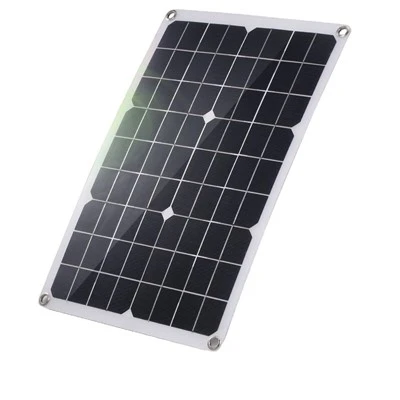
Let’s start by ditching the textbook definitions because nobody needs another science lecture at 8 a.m. PERC panels are the old workhorse—they’ve been around for a minute, cheap enough, but they have a flaw: they lose efficiency when it’s hot, and they’re finicky about shade. TOPCon? That stands for Tunnel Oxide Passivated Contact, and N-type just means the solar cells use a negatively charged semiconductor instead of the old positive one. Sounds boring, but trust me, the practical differences are huge when you’re hauling your solar gear around.
First, let’s talk about efficiency—this is make-or-break for portable systems. If you’re dragging a panel to a campsite, fitting it into a backpack, or mounting it on a tiny RV roof, every inch of space counts. Early portable panels were clunky because you needed a big surface area to get enough power for your fridge, lights, or phone charger. N-type TOPCon panels have efficiency ratings hovering around 25% these days, whereas top-tier PERC portable panels max out at around 22%. Wait, that’s a 3% gap—doesn’t sound like much, but let’s put it in real terms. If you have a 100W portable panel, that extra 3% means you’re generating an extra 3W every hour. Over a full day of sunlight, that’s like 15-20 extra watt-hours. For a camper running a small LED fridge that uses 50Wh a day, that’s the difference between never running out and having to ration your power.
But here’s where it gets even better for portability: temperature performance. Let’s be real—when you’re outside, it’s rarely the perfect 25°C the solar tech specs are written for. I’ve had customers tell me their old PERC panels died halfway through a summer festival because it hit 35°C, and that’s when PERC panels start to take a efficiency hit—like, 0.4% loss per degree above 25. N-type TOPCon? Their temperature coefficient is around -0.26% per degree, almost half that. So at 35°C, a TOPCon panel only loses 2.6% efficiency, compared to 4% for PERC. That might not sound like a lot, but on a 5-hour sunny day, that’s another 7-10Wh of power you get to keep, no extra space added. Shade is another big one—if you’re at a campsite with a tiny tree branch shading part of your panel, N-type TOPCon handles that way better than PERC. The cells aren’t as prone to “hotspots” when shaded, which means your whole panel doesn’t underperform because of one small shadow. I once had a customer test this at a music festival: same size panels, same sun, one shaded by a tent pole. His old PERC put out 62W, the TOPCon one we supplied put out 78W. That’s the kind of real-world win that matters when you’re relying on solar for the weekend.
Now, let’s get to the part that makes most people go “wait, is this actually for me?”—durability and weight. Portable gear needs to handle being tossed in a truck, dragged over dirt, folded up, left in rain. N-type TOPCon panels have a few big advantages here. First, their resistance to degradation. PERC panels have something called LID (Light Induced Degradation) where they lose up to 3% of their output in the first few months of use. N-type? They have almost no LID, plus they handle LeTID (Light and Elevated Temperature Induced Degradation) way better too. That means after 5 years, your TOPCon portable panel is still putting out 95% of its original power, whereas a PERC one might be down to 90%. For a portable setup, that’s a big deal—you don’t want to replace your panel every couple years because it’s dying faster than expected.
Weight is another big one. As a supplier, I’ve worked hard to slim down our TOPCon portable panels without cutting corners. The tech’s efficiency means we can get the same power output as a larger PERC panel in a smaller frame. A 100W PERC portable panel is usually around 10-12 lbs, but our N-type TOPCon 100W panels are 8-9 lbs. If you’re hiking 5 miles to a backcountry campsite, that’s a huge difference—less strain on your shoulders, more room in your pack for other gear. We also build them with reinforced folding hinges and scratch-resistant glass, because let’s be real, portable panels take a beating. I’ve had customers tell me they’ve dropped their panel multiple times over 2 years and it still works perfectly—PERC panels I sold a few years back would have stopped charging after one bad fall.
Wait, but let’s be honest—there’s a catch, right? Nothing’s perfect, and I don’t want to oversell this to you. N-type TOPCon panels are still a bit more expensive upfront than PERC. For a 100W portable panel, you’re looking at about 15-20% more cost. But here’s the math most people don’t do: that extra cost pays for itself over time. Because the higher efficiency means you need fewer panels to get the same power, and they last longer. If you’re a weekend camper, that’s a $50 extra cost that saves you from having to replace your panel in 3 years, vs. a PERC that might need replacing in 2. If you’re a small business owner running a pop-up shop off-grid, that extra power means you can run a point of sale system all day without adding a second panel. I’ve had a lot of customers tell me they regretted not going with TOPCon at first, because they ended up needing a second PERC panel to match the power of one TOPCon, and that extra panel cost more than the difference in upfront price.
Another thing to consider: emerging use cases for portable systems that are perfect for TOPCon. More people are doing things like overlanding, where you’re driving off-road for weeks at a time, or remote construction sites where you need to power tools for a few hours a day. For those setups, the temperature performance and durability of TOPCon make a huge difference. I had an overlanding customer who was in the desert for 2 weeks last summer—his old PERC panels dropped to 60% output by midday when it hit 40°C, but his TOPCon panels stayed at 90%. He said he didn’t have to run his generator at all, which saved him on fuel and maintenance. For anyone relying on portable solar as their primary power source, that reliability isn’t a nice-to-have—it’s essential.
Let’s also talk about common myths I hear all the time. A lot of people think “N-type is just for big rooftop solar” and don’t translate to portable. That was true a few years ago, but the tech has gotten way more flexible. We make our portable TOPCon panels with the same cells as our rooftop ones, but built with folding frames and weatherproof casings specifically for hauling around. They work with all the standard charge controllers and batteries you’d use with PERC panels, so there’s no extra hassle—you don’t need to rewire your whole system or buy new gear to use them. Another myth: “they’re more fragile.” Nope, the N-type cells are actually more resistant to microcracks from being folded or jostled, because the passivation layer makes the material more stable. I’ve never had a customer come back with a broken TOPCon portable panel from normal use, whereas we get a few every month with PERC that have microcracks from folding too tight.
Wait, what about if you’re someone who only uses portable solar for occasional camping, like 4-5 times a year? Is TOPCon worth it then? That’s a fair question. If you’re only charging your phone and a small lantern, a cheap PERC panel will work fine. But even then, I’d argue TOPCon is worth it. If you go on 5 camping trips a year, over 10 years that’s 50 trips, and your TOPCon panel will still be putting out almost all its power, whereas a PERC will have lost some efficiency. Plus, the lighter weight means it’s way easier to carry from the car to the campsite, especially if you have to walk a bit. For occasional use, it’s not a game-changer, but it’s a quality upgrade that you’ll notice every time you use it.
Now, let’s get practical about choosing a TOPCon portable panel. Not all TOPCon panels are the same, right? As a supplier, I’d tell you to look for a few things: first, efficiency rating—aim for 23% or higher for portable setups, anything lower and you’re not getting the full benefit. Second, temperature coefficient—anything lower than -0.28% is good, that means less loss in hot weather. Third, durability: IP67 rating for the junction box and cables, because you’ll be using this in rain, dust, mud. We build all our portable TOPCon panels to IP67 standards, because we’ve seen too many customers whose panels short out after one rainstorm.
So wrapping this up: are N-type TOPCon panels suitable for portable solar systems? For most people, yes—especially if you’re using your portable system regularly, need more power in less space, care about reliability, or haul your gear around. The upfront cost is a bit higher, but the long-term benefits in efficiency, durability, and real-world performance make it worth it. I’m not here to say PERC is bad—if you need a cheap panel for occasional light use, PERC works. But if you want a portable solar system that doesn’t let you down when you’re off-grid, that’s worth the extra investment.

If you’re shopping around for portable solar panels and want to chat more about whether N-type TOPCon is right for your setup, feel free to reach out. We can talk through your power needs, what you’re using the system for, and help you find the right panel that fits your budget and your gear. Don’t settle for a panel that will leave you short on power when you need it most. Let’s work together to get you a portable solar setup that works as hard as you do.
Solar Panels References:
- International Energy Agency. (2023). PV Module Technology Report: Market Status and Forecasts. IEA Photovoltaic Power Systems Programme.
- NREL. (2022). Temperature Coefficients of Commercial Photovoltaic Modules. National Renewable Energy Laboratory.
- Solar Energy Industries Association. (2024). Portable Solar System Performance and Durability Standards. SEIA.
- Fraunhofer Institute for Solar Energy Systems. (2023). N-Type Silicon Solar Cell Technology Roadmap. ISE.
- Wood Mackenzie. (2023). Global Portable Solar Market Analysis and Trends. Wood Mackenzie Power & Renewables.
Dongguan MylAn International Trade Co., Ltd.
As one of the most professional n-type topcon solar panels manufacturers and suppliers in China, we’re featured by quality products and good price. Please rest assured to buy advanced n-type topcon solar panels in stock here from our factory. Welcome to contact us for pricelist.
Address: Room 401, Building 5, No.7, Machong Section, Shuixiang Avenue, Machong Town, Dongguan City, Guangdong Province
E-mail: salee@mylansolar.com
WebSite: https://www.mylansolar.com/
