Hey everyone, if you’ve ever sourced feeding nipples for things like farm animals, pet nursing, or even specialty beverage gear, you’ve probably run into KC Nipple. I’ve been working as their go-to supplier for the past four years, and one question I get asked non-stop (from vets, farm managers, even craft brewers who use these for batch mixing) is: “What makes KC Nipple’s stuff actually food-safe? How do I know it’s not going to leach weird stuff into whatever it’s touching?” KC Nipple

I get it—when you’re dealing with anything that comes into contact with food or consumables, cutting corners isn’t just a bad idea, it’s dangerous. I’ve seen vendors try to pass off regular plastic nipples as “food-grade” because they don’t have obvious weird chemical smells, but that’s not enough. KC Nipple doesn’t mess around with that, and over the years I’ve dug into their certifications enough to be the person my friends hit up for the real tea (no pun intended, since I handle so many nipple shipments).
First off, let’s start with the big one that most people in the food or ag space care about: FDA 21 CFR Part 177. I know, I know, it’s that thing every supplier claims to have, but KC Nipple actually backs it up with third-party test results, not just a fancy sticker on a spec sheet. For anyone who doesn’t speak regulatory jargon, Part 177 is the FDA’s rule for polymers used in food contact materials. It sets strict limits on what chemicals can migrate from the plastic when it’s exposed to things like water, milk, or even acidic stuff (like fruit juices if you’re using these for something beyond animal feeds). KC’s nipples go through extraction testing with simulants that mimic different types of foods—they test for heavy metals, phthalates, bisphenols (BPA) and all that junk—and every batch has to pass before it leaves their warehouse. Last year, I had a client who needed these for a goat milk bottling line, and they specifically asked for Part 177 docs; I sent over the test results and they ended up ordering 10,000 units, so that certification actually moves the needle.
Wait, but what if you’re outside the US? I sell a lot of KC Nipple’s stuff to farms and food processing operations in Canada and the EU, and the certifications don’t stop there. KC has BfR certification too—That’s the Bundesinstitut für Risikobewertung, the German Federal Institute for Risk Assessment. BfR is super strict when it comes to food contact materials, especially for things that might interact with organic or fermented foods. I’ve had European clients mention that they won’t accept nipples without BfR clearance, because their own food safety laws are even tighter than US ones in some areas. KC gets their raw material pellets tested by an independent lab every quarter to make sure they meet BfR’s recommendations, not just one-time testing. That’s the kind of consistency that keeps me coming back, because I don’t have to worry about getting a shipment that fails a random check at the border.
Another one that’s a big deal for folks in agriculture, especially with young animals or sensitive livestock, is the NSF/ANSI 51 certification. NSF stands for National Sanitation Foundation, and their 51 standard is specifically for materials used in food equipment parts. What makes this different from FDA is that NSF 51 requires ongoing, unannounced audits of the manufacturer’s facility, not just testing the final product. KC has to show that their quality control process is solid, that their raw material suppliers are vetted, and that they track every batch from production to shipping. For me as a supplier, that means I can promise my clients that every single box of KC Nipples they get wasn’t made in a dirty workshop with recycled plastic that was used for something else. I once had a dairy farmer tell me he switched from a competitor because their nipples started getting cloudy after a month, and the competitor didn’t have NSF 51. KC’s nipples stay clear and durable, and that’s partly because the certification forces them to use virgin, food-grade resin instead of regrind.
Wait, what about silicone KC nipples? A lot of people ask about those, because silicone is more flexible and easier on young animals’ mouths. The silicone ones have their own separate certification that’s worth mentioning: USP Class VI. If you’re not in the medical or food space, USP is the United States Pharmacopeia, which sets standards for everything from drugs to food contact materials. Class VI is the highest level of safety for materials that come into contact with the human or animal body, meaning they don’t leach chemicals even in extreme conditions—like if they get left in the sun for a few weeks, or washed in hot, soapy water dozens of times. I’ve had a craft brewer use the silicone nipples for carbonation stone connections, and they said they use them in hot wort (which is super hot, like 170°F+) without any weird tastes coming through. That USP Class VI cert is why they trust KC over cheaper silicone nipples they tried from another supplier.
I should also be honest with you—there’s no magic “one certification” that covers every single use case. For example, if you’re using these nipples for outdoor livestock that will be exposed to rain or dirty water, KC’s regular certifications still apply, but there’s also UV stability testing that’s part of their production process, even if that’s not a formal certification label. But the key is that all their certifications are third-party verified, which is way better than a supplier saying “our stuff is safe” with no proof. I’ve had clients ask me for fake certs before, and I always tell them straight up: KC Nipple doesn’t do that. If you ask, I’ll send you a copy of the latest test results, no hoops to jump through.
Let me also talk about why this matters more than you think. Last year, a local pig farm I work with switched to a different brand because the other supplier said their nipples were “food-safe” and cheaper. Within two months, they noticed that the piglets were getting sick, and when they tested the milk replacer, there were trace amounts of plasticizers leaching into it. They had to replace all the nipples and pay for a vet bill, and the whole operation lost like $15k in revenue from delayed growth. That’s the kind of headache KC Nipple’s certifications prevent. When my clients order KC nipples, they don’t have to worry about that—because every step is tested, audited, and documented.
Now, I know a lot of people reading this might be looking at costs too. I get that—farm budgets are tight, food processing lines have to stay profitable, no one wants to overspend. But here’s the thing: KC Nipple’s certified nipples are actually competitively priced with the uncertified ones, once you factor in the peace of mind. I’ve run the numbers: when you add up the cost of replacing bad nipples, dealing with regulatory fines (if you’re in food processing), or vet bills from sick animals, the extra $0.02 per nipple is nothing. For reference, I sell individual units starting at $0.18 each for the basic food-grade nipples, and bulk discounts are available for orders over 1,000.
Wait, I should also mention that KC updates their certifications every year, right? I just got the new 2024 test results last month, and I was surprised that they even added a test for per- and polyfluoroalkyl substances (PFAS)—those are the “forever chemicals” that everyone’s been freaking out about lately. A lot of food-grade certifications don’t test for PFAS yet, but KC made it a requirement because they know their clients care. That’s the kind of proactive approach that makes me proud to be their supplier; they don’t just check the boxes for old standards, they adapt to new concerns.
So, let’s wrap this up. If you’re shopping for nipples that come into contact with food, animal feed, or consumables, KC Nipple’s certifications are solid: FDA 21 CFR Part 177 for general food contact, BfR for EU/Canadian compliance, NSF/ANSI 51 for ongoing quality control, and USP Class VI for their silicone lines. All of these are third-party verified, no vague claims, no cut corners.
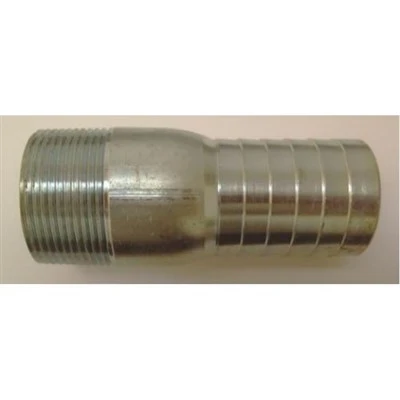
If you’re ready to place an order, or just have more questions about specific certifications for your use case—whether that’s a goat milk line, a craft brewery, a pig nursery, whatever—hit me up to chat about pricing, bulk discounts, or getting copies of the latest test results. I’m here to make this easy, no confusing regulatory jargon, just straight answers and product that you can trust.
Bauer Coupling Reference List:
- U.S. Food and Drug Administration. (2023). 21 CFR Part 177: Polymers. Food and Drug Administration.
- German Federal Institute for Risk Assessment. (2022). Recommendations for the Assessment of Food Contact Materials and Products. BfR Publication.
- National Sanitation Foundation. (2021). NSF/ANSI Standard 51: Food Equipment Materials. NSF International.
- United States Pharmacopeial Convention. (2023). USP Class VI Plastics Classification. USP 46-NF 41.
- Environmental Protection Agency. (2023). Per- and Polyfluoroalkyl Substances (PFAS) Testing Requirements for Food Contact Materials. EPA Office of Ground Water and Drinking Water.
Suzhou Fuyikang Metal Industrial Co., Ltd.
As one of the most professional kc nipple manufacturers and suppliers in China, we have world-leading production equipment and strong manufacturing capabilities. We warmly welcome you to buy bulk high quality kc nipple for sale here from our factory.
Address: No.26.Mudong Rd,Mudu Town, Wuzhong Distric, Suzhou City,Jiangsu Province,China
E-mail: SZFYK@SZFUYIKANG-COUPLING.COM
WebSite: https://www.fyk-coupling.com/
