Hey everyone, thanks for stopping by! I’m gonna keep this real because I know when you’re out there looking at customized equipment, the last thing you need is some generic, stuffy article that skips over the stuff that actually matters. As a supplier of exactly that—other customized equipment, the weird and wonderful stuff that doesn’t fit into a standard box—people hit me up all the time asking: “What the hell do I need to know about electromagnetic compatibility (EMC) for my custom build?” Other Customized Equipment
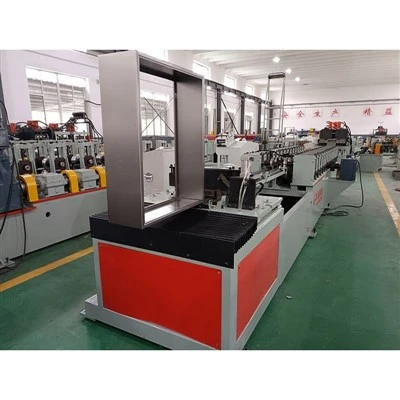
First off, let’s cut through the jargon. EMC isn’t just some random industry buzzword. It’s the whole thing where your gear doesn’t mess up other electronics around it, and other electronics don’t mess up your gear. For standard off-the-shelf equipment, EMC is already baked in, right? But when you’re building something one-off, tailored to a specific job or space, all those rules go out the window—well, not really, they just get way more tailored to your exact setup. That’s where a lot of clients trip up. They think “it’s just a small machine for my workshop” or “it’s a prototype for a niche lab” so EMC doesn’t apply. Newsflash: if your custom emitters are frying the hospital’s heart monitor down the hall, or your sensor can’t read data because a nearby motor is throwing static, that’s a problem. And it’s your problem, not the electrician’s, not the utility company’s.
Let’s start with the basics you can’t skip. First, you need to figure out where your customized equipment is gonna live. That’s non-negotiable. A piece of gear going into a commercial office building is way different than one going into a remote farm or a hospital, or even another piece of industrial machinery on a factory floor. For example, if your custom tool is going into a hospital, you’re dealing with IEC 60601 medical EMC standards. I know, I know—“I’m not making a medical device, I’m just a custom diagnostic sample handler for their lab!” Doesn’t matter. If it’s on hospital grounds, any equipment connecting to their power grid or interacting with their sensitive gear has to meet that bar. Last year, I had a client building a custom storage unit for lab specimens that had a built-in temperature sensor and a small Wi-Fi module to sync data. They thought because it was a storage unit, not a scanner, EMC was optional. Nope—they tried to install it, and the hospital’s MRI techs flagged that the Wi-Fi was causing interference with their imaging equipment. We had to rework the signal shielding and switch to a lower-power frequency, and fast, because delays would’ve cost them big time.
Then there’s the stuff that depends on your equipment’s function. If your custom gear is pumping out high frequencies—think: high-power motors, RF modules, laser systems, even something as simple as a custom power supply for a prototype robot—you gotta test for emissions. That means making sure the electromagnetic waves it puts out don’t exceed limits set by the region you’re operating in. In the US, that’s FCC Part 15 or Part 18, depending on the frequency range. In the EU, it’s CE marking under the EMC Directive. Wait, but if you’re only selling within a single factory, do you still need to follow those? Yeah, if that factory is connected to the public grid. If your custom welder throws so much noise that it trips the entire factory’s circuit breakers or messes with the line’s automation controls, that’s gonna get shut down fast. We had a client a couple years back making a custom high-frequency welder for a car parts manufacturer. They skipped emissions testing because it was just for their client’s shop. First day installing it, it took down the whole shop’s HVAC system and the inventory scanner. Total nightmare. We ended up adding line filters and shielding the welder’s control box, and that fixed it. Moral of the story: don’t skip emissions, even for “small” or “internal” builds.
On the flip side, your gear needs to be immune to other electromagnetic junk. That’s the other half of EMC, and it’s equally important. If your custom sensor is supposed to pick up a tiny signal from a metal part, but a nearby radio tower or a truck’s ignition system is drowning that signal out, it’s useless. I worked with a startup a while back building a custom soil moisture sensor for farm fields. They tested it in their lab, where everything was quiet, and it worked great. But once they got it out in the real world, next to a well pump with a big motor, the readings were all over the place. We had to add shielding to the sensor’s circuit board and adjust the signal processing algorithm to filter out that specific frequency noise. Turns out, they forgot to test for immunity to industrial RF, which is super common in agricultural areas with all those pumps and irrigation systems.
Now, here’s the part that’s specific to customized equipment, not the standard stuff. You don’t have a one-size-fits-all test, right? Standard EMC tests run in a lab with standardized setups, but when your equipment is custom, you might have unique angles. Like, maybe your gear has a long data cable that runs right next to a power cable— that’s a super common hidden source of interference for custom builds. Standard equipment usually keeps cables separated, but when you’re routing everything to fit a tight space, that’s an easy mistake to make. We always flag that for our clients, because it’s such a quick fix but such a common pain point. Just separating power and signal cables by a few inches, or adding a ground plane between them, can cut interference by 90% and you never even have to run a formal full test for that part.
Another thing: modularity. A lot of custom equipment is built by snapping together different parts, maybe off-the-shelf modules paired with custom hardware. The problem is, a module that works fine on its own might throw interference when paired with another part, or when you add a custom power supply. That’s why we do incremental testing during the build, not just at the end. Test each custom part, then test when you add each module, before putting the whole thing together. Saves so much time and money instead of tearing apart a fully assembled custom build to fix interference. I’ve seen clients go the “test at the end” route and spend weeks reworking a unit because one random module was the culprit. Incremental testing takes a couple extra days, but it’s worth every penny.
Also, documentation. I know, I know—docs are boring, but when you’re dealing with EMC, they’re non-negotiable. If you sell custom equipment, you need to tell the end user how to install it, how to route cables, what power supply to use, and what frequencies it operates on. If you don’t, they’re gonna mess something up. Like, someone using the wrong power adapter, or routing a signal cable next to a motor cable, and then blaming your equipment for interference that’s totally preventable. We include a simple EMC installation sheet with every custom build we ship, and that’s cut our support tickets about interference by like 60%. It’s not even a big document—just a couple pages that say “keep power and signal cables separated at least 3 inches,” “don’t use extension cords longer than 10ft for control signals,” “this unit operates on 2.4GHz, so avoid other 2.4GHz devices nearby if possible.” That’s it, but it works.
Wait, let’s talk about when you might need formal third-party testing. If your custom equipment is gonna be sold commercially, or go into a public space like a restaurant or office building, you’re gonna need it. But if it’s for internal use at a single company, maybe not—though I still recommend at least a basic pre-test. A lot of small businesses don’t realize that if they’re moving their custom gear to a new location, EMC issues can pop up. A workshop in a rural area has way less background EM noise than a downtown office building, so a unit that worked fine in the old shop might act up in the new one. We had a client that moved their custom packaging machine from a small warehouse to a bigger industrial park. It worked perfectly at the old place, but at the new one, it kept resetting for no reason. Turns out, the new building had a newer power grid with higher-frequency harmonics that their machine’s control system couldn’t handle. We added a harmonic filter to the power input, and that fixed it. If they’d done a quick EMC check before moving, they could’ve avoided downtime.
Common myths I hear all the time: “Custom equipment is too unique to have EMC requirements.” No, EM waves don’t care if it’s custom or not. “I’ll just add shielding later if there’s a problem.” Yeah, but adding shielding to a fully assembled custom machine is way more expensive than adding it during build. “My equipment is low-power, so it can’t cause interference.” Even a tiny Bluetooth module can cause problems if it’s routed wrong near a sensitive sensor. I’ve seen a client’s custom temperature gauge (that used a tiny 5V Bluetooth module) interfere with a warehouse’s inventory tracking system from 20ft away. Low power doesn’t mean no power.
So, what should you actually do if you’re ordering other customized equipment? First, tell your supplier the exact end location, and what other gear it’s gonna be near. That’s the most important info you can give them. Don’t just say “it’s for my business”—say “it’s going on the 3rd floor of our downtown office, next to a copier and a Wi-Fi router,” or “it’s going to our farm in Iowa, near three well pumps and a grain dryer.” That lets them tailor the EMC design to your specific setup, not a generic one. Second, ask about incremental testing and installation docs. Good suppliers will offer to test as they build, and give you clear, simple guides for setting it up, no fancy engineering jargon. Third, don’t cut corners on power supplies and cables. Those small parts are the number one cause of EMC issues in custom builds. Don’t buy the cheapest off-brand power supply, and don’t hack together cable runs to save space. It’s gonna bite you later.
At the end of the day, EMC for customized equipment is all about planning, not last-minute fixes. It’s not about following a rigid set of rules for standard gear—it’s about understanding your equipment, your space, and how electronics interact in that specific scenario. As someone who works with custom builds every single day, I can tell you the worst calls I get are from people who skipped EMC steps, and now their gear doesn’t work where they need it. The good calls? The ones where we talk EMC early, fix issues before they happen, and the client gets a custom piece of equipment that works exactly as intended, no interference headaches.

If you’re in the market for other customized equipment, whether it’s a small tool for your workshop, a prototype for your startup, or a custom machine for your factory, don’t leave EMC to chance. Hit us up to chat through your project, and we’ll walk you through exactly what you need to avoid those costly, annoying mistakes. No generic sales pitch, just straight talk about what works for your unique build.
Other Customized Equipment References
- IEC 60601-1-2:2020, Medical electrical equipment – Part 1-2: General requirements for basic safety and essential performance – Collateral standard: Electromagnetic compatibility – Requirements and tests
- FCC Part 15: 47 CFR Parts 15 – Radio Frequency Devices
- European Union EMC Directive 2014/30/EU
- Electromagnetic Compatibility (EMC) for Industrial Machinery, National Institute of Standards and Technology (NIST) Internal Report, 2022
Weifang Yue Jun Machinery Co., Ltd.
With abundant experience, we are one of the most professional customized equipment manufacturers in China. We warmly welcome you to buy durable customized equipment made in China here from our factory. We also accept customized orders.
Address: Kuiwen District, Weifang City, Shandong Province
E-mail: adrian@yuejunmachinery.com
WebSite: https://www.yuejunmachinery.com/
