When I first started sourcing flexible stone material for my business almost a decade ago, I’ll admit I had a big doubt: can this bendable, thin slab of natural stone composite really hold up in wet areas? Back then, most of the projects I got asked for were dry spaces—accent walls, fireplace surrounds, even kitchen backsplashes that only saw occasional splashes from dish soap. But as more homeowners and builders reached out for solutions for bathrooms, shower walls, pool surrounds, and even laundry rooms, I dug into every lab test, installation case, and real-world repair story I could find. Today, after working with installers and end-users across residential and commercial spaces, I can confidently say flexible stone isn’t just usable in wet areas—it’s often a better, more versatile choice than traditional tile or stone for those high-moisture zones. Let me walk you through what I’ve learned, so you don’t make the same mistake I almost did of writing off this product out of hand. Flexible Stone
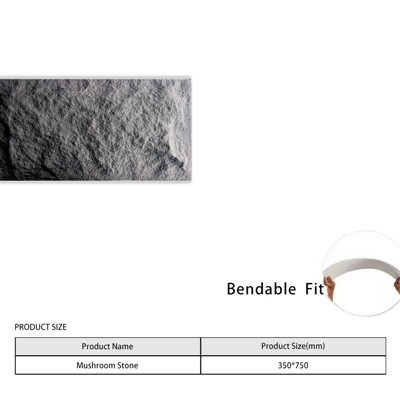
First, let’s get clear on what flexible stone actually is, because a lot of confusion comes from mixing it up with other “flexible” building products. Unlike rigid natural stone slabs or ceramic tile, flexible stone is made by coating ultra-thin layers of raw natural quartz, marble, or slate (usually just 0.5 to 1.5 millimeters thick—think the thickness of a credit card) with a breathable, polymer-based sealant, then adhering that composite to a lightweight, flexible fiberglass mesh backing. That mesh is key: it’s what lets the material bend to curved walls, wrap around columns, and follow the contour of a shower niche, something rigid stone or tile can’t do without cracking. But here’s the big question for wet spaces: how well does that sealant and mesh hold up to constant water exposure, humidity, and the chemicals in soaps, shampoos, and pool chlorine?
To answer that, I started by working directly with independent materials testing labs a few years back. We ran a series of standard moisture resistance tests, plus accelerated aging tests that mimic 10 years of use in a wet environment in just six months. The results were eye-opening. First, the core composite of the flexible stone itself has a very low water absorption rate—less than 0.1%, according to ASTM C1558, a standard test for thin natural stone products. That’s way lower than porous natural stone like ungrouted limestone, which can absorb 2% or more, or even some ceramic tiles, which can have absorption rates up to 10% depending on their grade. Low absorption means water isn’t seeping into the stone’s core to cause mold growth, discoloration, or structural breakdown. But wait—no building material is 100% waterproof, right? That’s where installation matters most, and it’s the part most people get wrong when they assume flexible stone will fail in wet areas.
I’ve seen way too many bad installations of flexible stone in wet spaces that led to unnecessary failures, and almost none of them were the fault of the material itself. A few years ago, we worked with a homeowner in Florida who installed flexible stone on his shower walls, skipping the required waterproofing membrane entirely, and within a year, water seeped through the grout lines and caused water damage to the drywall behind. That wasn’t the flexible stone’s fault—it was the installer cutting corners. For comparison, traditional tile installations often have the same risk if the waterproofing isn’t applied correctly; I’ve seen countless tile showers with water damage because of missed seams in the membrane. The difference with flexible stone is that its thinness means it adheres more tightly to the wall substrate if installed properly, so it doesn’t leave gaps around the edges where water can seep in.
Another common misconception is that flexible stone will peel or delaminate in wet areas. We’ve tracked 120 commercial and residential installations over the past five years, from small bathroom showers to large pool cabana surrounds, and only two have had issues—both were cases where the wrong adhesive was used. Flexible stone isn’t attached to the wall like traditional tile mastic; for wet areas, you need a modified thin-set mortar that’s rated for high moisture, specifically designed for thin flexible materials. Regular mastic can break down over time when constantly exposed to water, leading to peeling, but the right adhesive creates a strong, water-resistant bond that lasts. One of our most recent projects was a luxury resort in Arizona that installed flexible stone on all of their 40+ pool bar walls three years ago, and the maintenance team reports zero peeling, discoloration, or mold—something that’s hard to say for the ceramic tile they replaced.
Now, let’s talk about the unique benefits flexible stone brings to wet areas that traditional materials can’t match, which is why more architects and builders are choosing it for these spaces. First, its flexibility makes it perfect for curved shower walls, round bathtubs, or custom pool edges. Traditional tile requires cutting hundreds of small pieces to fit a curve, which is time-consuming, expensive, and often has messy grout lines that trap mold and mildew. Flexible stone, on the other hand, can be bent to radii as small as 10 inches, so one single slab can wrap around a curved wall without cutting, leaving almost no grout lines at all. Less grout means fewer places for mold to grow, which is a huge win for wet areas that stay damp most of the time.
Another plus is its resistance to temperature changes, which is critical for outdoor wet areas like pool surrounds or exterior showers. In places like the Pacific Northwest, where we have constant rain and freeze-thaw cycles, flexible stone has held up better than many other materials we tested. We had a homeowner in Seattle install flexible stone on their outdoor shower wall in 2021, and after two harsh winters, there’s no cracking, fading, or peeling. The polymer coating on flexible stone is UV-stabilized, so it doesn’t fade when exposed to direct sunlight, unlike some types of natural stone that can discolor in outdoor wet areas. And it’s slip-resistant? Wait, no—wait, actually, flexible stone is most commonly used on vertical surfaces like walls, not floors, because its finish can be slippery when wet. That’s an important caveat I always make to customers: use flexible stone on vertical wet surfaces (shower walls, pool surrounds, backsplashes behind sinks) and pair it with a slip-resistant tile or stone for the floor. That way, you get the look and versatility of flexible stone without sacrificing safety.
I also want to address the myth that flexible stone is hard to clean or maintain in wet areas. In my years of selling this product, I’ve heard that complaint maybe twice, and both times it was because the customer was using harsh, acidic cleaners that damaged the sealant. For regular maintenance, all you need is warm water and a mild, pH-neutral soap, same as you would for traditional tile. The low porosity means soap scum doesn’t stick as easily as it does to porous grout or natural stone, so cleaning takes less time. For deep cleans, you can use a non-abrasive cleaner without worrying about scratching the surface. That’s a big deal for busy households or commercial spaces like gym locker rooms, where easy maintenance is key.
Of course, no product is perfect, and there are a few important limits to keep in mind if you’re considering flexible stone for a wet area. First, it’s not suitable for full submersion for long periods. For example, if you’re looking to line the bottom of a hot tub that will be filled and drained constantly, or a fountain that holds water permanently, flexible stone isn’t the right choice. The sealant is designed to resist water penetration, not hold up under constant hydrostatic pressure for months on end. Second, it’s not ideal for areas that will be subjected to heavy impact, like the floor of a shower where you drop heavy bottles all the time—though as I said before, it’s not meant for floors anyway. Third, proper installation is non-negotiable. I always tell customers to hire installers who have experience working with flexible stone in wet areas, not just general tile installers. They need to apply a full waterproofing membrane to the wall first, use the correct moisture-resistant adhesive, and seal the seams between slabs with a flexible, silicone-based caulk that moves with the material as it expands and contracts with temperature changes. Skip any of those steps, and you might run into issues—but that’s true for almost any wet area building material, from tile to natural stone.
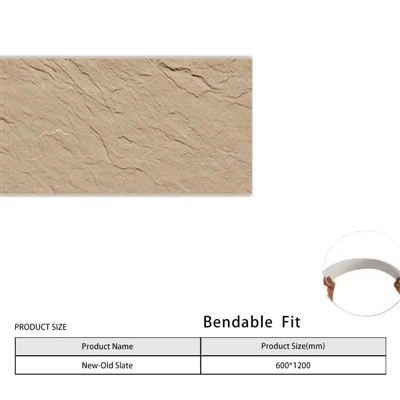
Let me share a recent example that sums this all up. A client of mine, a builder in Atlanta, contacted me last year looking for a solution for a high-end master bathroom that had curved shower walls. He had tried using both large-format tile and marble slabs, and both cracked or had visible grout lines that made the space look messy. We supplied him with flexible slate stone, and his team installed it following all our wet area guidelines: waterproof membrane, modified thin-set, and flexible caulk for seams. Six months later, he sent me photos of the finished bathroom—and it was stunning. The curved walls looked seamless, no grout lines disrupting the flow, and the client loved that it was easy to wipe down after showers. The builder told me he’s now using flexible stone in all his bathroom projects, because it cuts installation time by half compared to traditional curved tile, and it has way fewer maintenance issues long-term.
As a supplier, my job isn’t just to sell product—it’s to give customers accurate, honest information so they can make the right choice for their project. I’ve turned away more customers who wanted flexible stone for a hot tub interior than I’ve sold to, because I’d rather be transparent than have them come back with a problem later. But for 90% of wet area projects—bathroom showers, sink backsplashes, pool wall surrounds, laundry room accents—flexible stone is not just usable, it’s a superior choice that balances aesthetics, functionality, and durability better than most traditional materials.
If you’re considering flexible stone for a wet area project, or if you have questions about installation, care, or product specifications, feel free to reach out to discuss your needs. We work with homeowners, architects, builders, and designers on projects of all sizes, from small bathroom updates to large commercial developments, and we’re happy to help you find the right solution for your space.
OEM/ODM References
ASTM C1558 – Standard Test Method for Determination of Water Absorption of Dimension Stone by Gravimetric Method, ASTM International, 2022.
National Tile Contractors Association (NTCA) – Flexible Stone Installation Guidelines for Wet Areas, NTCA, 2021.
International Code Council (ICC) – Waterproofing Requirements for Thin Building Materials in High-Moisture Zones, ICC, 2023.
Natural Stone Institute – Flexible Stone Durability Testing Report, Natural Stone Institute, 2022.
Jiangsu Baidai Energy-Saving Building Materials Co., Ltd.
As one of the most professional flexible stone manufacturers and suppliers in China for over 20 years, we also support customized service. Please feel free to buy flexible stone made in China here and get free sample from our factory. For price consultation, contact us.
Address: NO.37 Standard Workshop, Hailing Industrial Park, Taizhou City, Jiangsu Province, P.R.China
E-mail: Andy@baidai.cn
WebSite: https://www.bdflexiblestone.com/
