When I first started working as a tank trailer supplier over fifteen years ago, a customer walked into my workshop and asked if we could build a tank trailer that carried both liquid nitrogen and potable water without cross-contaminating either product. Back then, I’ll admit, I hesitated. We had standard models, sure—made for hauling milk, gasoline, or food-grade chemicals—but blending those two loads in one trailer felt impossible. Today, that project is just another day at our shop. So can a tank trailer be customized? The short answer is: not just yes—customization is what keeps our industry moving, and it’s more scientifically rigorous than many people realize. Tank Trailer

Let’s start with the basics. A tank trailer is far more than a cylindrical metal tank mounted on a chassis. It’s a precision system of parts designed for specific fluids, temperatures, and regulatory rules. Every component—from the interior lining to the valves, from the baffles to the pressure relief valves—affects how safely and efficiently a trailer works. Customization isn’t just adding a logo or changing the color; it’s engineering a solution for a unique problem.
Take that first customer who needed to alternate between nitrogen and potable water. Standard tank interiors use either carbon steel for industrial fluids or stainless steel for food products. But nitrogen is a cryogenic liquid, so it required a material that could withstand temperatures as low as -320°F without cracking, while potable water needed a lining that didn’t leach chemicals. We ended up using a duplex stainless steel alloy—strong enough for cryogenics and non-reactive with drinking water—plus separate discharge ports so the two fluids never touched. That project taught me something critical: customization starts with listening. A customer doesn’t always know the right terms, but they know what their operation needs, and it’s our job to translate that into a design that works.
One of the most common areas of customization we handle is interior tank linings. Not all fluids are kind to steel. Sulfuric acid eats through regular steel in weeks, while crude oil can leave sticky residues that are hard to clean. That’s why we offer custom linings like polyethylene, epoxy, or glass—each chosen for compatibility with the fluid. For a farmer hauling liquid fertilizer, for example, a polyethylene lining prevents acid from corroding the tank and stops fertilizer from sticking, making cleaning between loads easy. For a chemical manufacturer moving corrosive industrial solvents, a glass lining acts like a protective barrier, extending the tank’s lifespan by decades. We even recently built a custom trailer for a craft brewery that needed to haul edible oils and beer without tainting either—we used a dual epoxy lining that’s food-safe for beer and resistant to oxidation for oils.
Another big part of customization is handling different pressure and temperature requirements. Cryogenic trailers, for example, need to insulate liquid oxygen or nitrogen to keep them from boiling off during transport. Standard trailers don’t have that insulation, so we add a vacuum-jacketed layer of insulation made from aluminum foil and fiberglass. That’s not a simple add-on—we have to calculate the thickness of the insulation based on how long the load will be in transit and the outside temperature. For a customer moving liquefied natural gas (LNG) across the country, that insulation can mean the difference between losing 5% of the load to evaporation or less than 1%. We also adjust pressure relief valves for these trailers; too low, and they open too often, wasting product; too high, and the tank could rupture. It’s a balance that requires testing and precise engineering.
Valve and port customization is another area where we see a lot of demand. Some customers need to load and unload from the top, others from the bottom—depending on their storage facilities. For example, a wastewater treatment plant we work with prefers bottom discharge because it reduces exposure to harmful fumes, so we install large-diameter bottom valves with secure locking mechanisms. A food processing company, though, wants top loading to keep their lines clean, so we use sanitary fittings that are easy to sanitize between batches. We also build custom valve manifolds for customers who carry multiple products in separate compartments. A multi-compartment trailer isn’t just splitting a tank into sections; each compartment needs its own valves, pressure gauges, and even linings to keep products separate. For a company hauling different flavors of syrup, for instance, each compartment has a food-grade stainless steel lining and its own discharge valve, so they don’t mix strawberry and chocolate syrup in transit.
Baffle customization is less talked about but equally important. Baffles are the internal plates that prevent liquid from sloshing during transport, which can make the trailer unstable. Standard baffles work for most liquids, but some fluids are thicker or have different flow properties. For a customer moving molasses, which is very viscous, we use larger baffles with bigger openings to let the molasses flow slightly, reducing stress on the trailer’s frame. For a hazardous liquid like gasoline, we use smaller baffle openings to minimize sloshing and the risk of static electricity. We also adjust baffle spacing based on the trailer’s length and its intended use—short trailers for urban deliveries have closer baffles than long-haul trailers, which can handle slightly more space between baffles.
But here’s the thing: customization doesn’t just benefit the customer. It also drives innovation in our industry. When we took on that cryogenic nitrogen project fifteen years ago, we had to learn about materials science and cryogenic insulation from scratch. Today, we use that knowledge to build other cryogenic trailers for medical products like cold vaccines and blood plasma. Every custom job adds to our expertise, making us better at solving the next problem a customer brings us.
Of course, there are limits to customization. We can’t build a tank trailer that defies physics—you can’t put a 10,000-gallon tank on a chassis designed for 8,000 gallons. We also have to comply with government regulations like the FMCSA in the U.S., which set standards for tank design, construction, and testing. Any custom trailer has to meet those standards, which means we have to work closely with regulators to get approvals for new designs. But even within those limits, there’s still plenty of room to tailor a trailer to a customer’s exact needs. For example, we can adjust the chassis height for a customer who has low clearances at their loading dock, or add toolboxes and storage compartments for their hoses and valves. We even offer custom painting and labeling, so a customer’s brand is clearly visible on every trailer.
I think what surprises most people is how much customization goes into even what looks like a standard trailer. When a customer comes to us and says, “I need a trailer for transporting wine,” we don’t just pick a stainless steel tank off the shelf. We ask questions: Is it red wine or white? Will you be moving hot juice for fermentation or finished cold wine? How often do you need to clean the tank? All those answers go into the design. For red wine, which has tannins that can stain, we use a special passivation process on the stainless steel to make it easier to clean. For juice that’s still warm, we add a small cooling jacket to keep the temperature stable during transport, preventing the wine from spoiling.
One recent project stands out to me: a small craft distillery that needed a custom trailer to haul whiskey from their distillery to a bottling plant. They had a unique problem—their whiskey was aged in charred oak barrels, and they wanted to avoid any metal taste from the tank. So we worked with a company that lines tanks with oak wood, just like a barrel. It wasn’t a standard lining, and we had to test it to make sure the oak wouldn’t absorb too much whiskey or leach anything into it. After a few prototypes, we got it right. The trailer has two oak-lined compartments, each with a small valve, and it’s become their go-to for moving batches of 500 gallons each. That project is a perfect example of why customization matters—it’s not just about function, it’s about preserving the quality of the product a customer works so hard to make.
Another area where we do a lot of custom work is for specialty chemicals. A pharmaceutical company might need a trailer that can maintain a temperature of 35°F for transporting drug compounds, while a fertilizer company needs a trailer that can hold up to 180°F for liquid nitrogen fertilizer. We build in temperature control systems—either insulation for cold or heat-resistant coatings for hot fluids—that are tailored to those exact temperatures. We also add tracking systems, so a customer can monitor the temperature and location of their load in real time, which is critical for pharmaceuticals where a temperature excursion can ruin a batch.
I’ve heard some people say that customization is too expensive, but that’s not always the case. A lot of times, a custom trailer saves money in the long run. If a farmer uses a standard trailer and has to clean it three times a day to avoid cross-contaminating different fertilizers, a custom trailer with separate compartments means they only need to clean it once, saving time and labor. For a long-haul hauler, a custom insulation system that reduces evaporation means they lose less product, adding up to thousands of dollars a year in savings. The key is to work with a supplier who understands your operation, so the customization adds value, not just cost.
So if you’re reading this and wondering if your specific needs can be met, the answer is almost certainly yes. Whether you’re hauling food, chemicals, cryogenics, or specialty products, there’s a custom tank trailer design that will work for you. The first step is to talk to a supplier who listens, who can explain the science behind the design, and who has experience with your type of product. That’s where we come in—we’ve spent years building custom solutions for customers across industries, and we’re always ready to take on a new challenge.
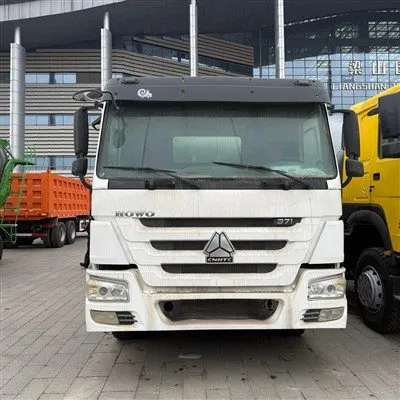
If you’re looking for a tank trailer that fits your exact needs, we’re here to help. We work with every type of business, from small craft operations to large industrial companies, and we take pride in engineering solutions that are safe, efficient, and built to last. Whether you need a multi-compartment trailer, a cryogenic insulated model, a food-grade lined tank, or something else entirely, let’s connect to discuss your project. We can walk through your requirements, explain the options, and help you build a tank trailer that works for your operation. Don’t hesitate to reach out and start the conversation.
Trailers References
- U.S. Department of Transportation Federal Motor Carrier Safety Administration. “Tank Vehicle Standards.” Federal Motor Carrier Safety Administration, 2023.
- Stainless Steel World. “Duplex Stainless Steels for Cryogenic Applications.” Stainless Steel World, vol. 21, no. 3, 2022, pp. 45–51.
- National Sanitation Foundation. “Standard 61: Drinking Water System Components.” National Sanitation Foundation, 2021.
- Journal of Fluid Engineering. “Baffle Design for Slosh Reduction in Liquid Cargo Tanks.” American Society of Mechanical Engineers, vol. 144, no. 7, 2022, pp. 1–8.
- Craft Beverage Modernization and Tax Reform Act. “Transport Guidelines for Alcoholic Beverages.” U.S. Congress, 2018.
Shandong Huayuanda Automobile Manufacturing Co., Ltd.
As one of the most experienced tank trailer manufacturers and suppliers in China, our products have good reputation in the market. We warmly welcome you to buy high quality tank trailer at low price from our factory. If you have any enquiry about cooperation, please feel free to email us.
Address: Industrial Park, Quanpu Town, Liangshan County, Jining City, Shandong Province
E-mail: Huayuanda2024@163.com
WebSite: https://www.hydtrailer.com/
