Hey there! I’m a guy working for a thermal flowmeter supplier. You know, thermal flowmeters are pretty cool devices, but when it comes to measuring flow in a two – phase flow, things get a bit tricky. So, I thought I’d share with you how these nifty gadgets do their job in such a complex situation. Thermal Flowmeter
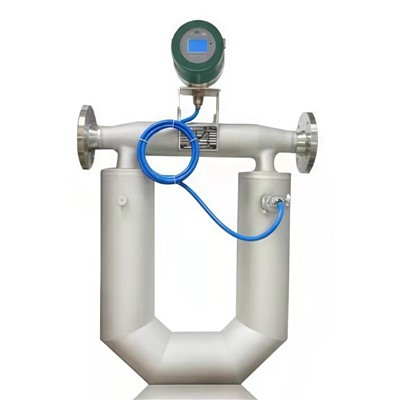
First off, let’s quickly go over what a two – phase flow is. In simple terms, it’s a flow that consists of two different phases of matter. Most commonly, we’re talking about a mixture of a gas and a liquid, like steam and water in a power plant, or oil and gas in the petroleum industry. Measuring the flow rate in these scenarios is super important for process control, efficiency, and safety.
So, how does a thermal flowmeter fit into all this? Well, thermal flowmeters work on a basic principle of heat transfer. There are two types of sensors in a typical thermal flowmeter: a heated sensor and a reference sensor. The heated sensor is, well, heated up, and the reference sensor just measures the temperature of the fluid.
In a single – phase flow (either just gas or just liquid), the process is relatively straightforward. The flowing fluid takes heat away from the heated sensor. The rate at which this heat is removed is proportional to the mass flow rate of the fluid. The more fluid flowing past the sensor, the more heat it takes away. The flowmeter measures the temperature difference between the heated sensor and the reference sensor, and based on that, it can calculate the mass flow rate.
But in a two – phase flow, things are a lot more complicated. The first problem we face is the difference in the heat transfer properties of the two phases. Gases and liquids have very different thermal conductivities and specific heats. For example, a gas like air has a much lower thermal conductivity than a liquid like water. This means that the heat transfer from the heated sensor to the gas will be much slower compared to the heat transfer to the liquid.
Let’s say we have a two – phase flow of steam and water. When water droplets pass by the heated sensor, they can take away a significant amount of heat very quickly because of their high thermal conductivity. On the other hand, when steam (a gas) passes by, the heat transfer is much less efficient. This makes it difficult to get an accurate measurement of the overall flow rate.
To deal with this, modern thermal flowmeters use some pretty smart techniques. One approach is to use advanced signal processing algorithms. These algorithms analyze the temperature signals from the sensors over time. They can detect the fluctuations in the temperature difference caused by the passage of different phases. For instance, a sudden drop in the temperature difference might indicate the passage of a liquid droplet, while a more gradual change could be due to the flow of gas.
By analyzing these patterns, the flowmeter can estimate the proportion of each phase in the flow and adjust the flow rate calculation accordingly. It’s like being a detective, looking for clues in the temperature data to figure out what’s really going on in the two – phase flow.
Another technique is to use multiple sensors. Instead of just one heated and one reference sensor, we can have an array of sensors placed at different locations in the pipe. This allows us to get a more detailed picture of the flow. Different sensors might experience different phases at different times, and by combining the data from all of them, we can improve the accuracy of the flow measurement.
For example, if one sensor is mostly in contact with the gas phase and another is more likely to be hit by liquid droplets, we can use the data from both to better understand the overall flow behavior. The flowmeter software can then use this multi – sensor data to create a more accurate model of the two – phase flow.
Calibration is also a crucial part of the process. When we’re dealing with two – phase flows, the calibration has to be done carefully. We need to simulate the actual two – phase conditions in the lab as closely as possible. This means creating mixtures of the gas and liquid phases with different proportions and flow rates.
During calibration, we measure the output of the flowmeter under these known conditions and adjust its internal parameters. This way, when the flowmeter is installed in the real – world application, it can give more accurate readings. It’s like tuning a musical instrument to make sure it plays the right notes.
However, despite all these techniques, there are still some limitations. For example, if the two – phase flow is highly turbulent, the distribution of the phases can change very rapidly. This can make it difficult for the flowmeter to keep up and accurately measure the flow rate. Also, if there are sudden changes in the proportion of the phases, the flowmeter might need some time to adjust its calculations.
But overall, thermal flowmeters are still a great option for measuring flow in two – phase flows. They offer a non – intrusive way of measuring the flow, which means they don’t have to disrupt the flow path. They’re also relatively easy to install and maintain compared to some other types of flowmeters.
In industries like chemical processing, power generation, and oil and gas, accurate flow measurement in two – phase flows is absolutely essential. Whether it’s ensuring the right amount of steam is being used in a power plant or monitoring the flow of oil and gas in a pipeline, thermal flowmeters can play a crucial role.
If you’re in an industry that deals with two – phase flows and you’re looking for a reliable flow measurement solution, we’ve got you covered. Our thermal flowmeters are designed with the latest technology and algorithms to provide accurate and reliable measurements in even the most challenging two – phase flow conditions. We can work with you to understand your specific requirements and customize the flowmeter to fit your application.

So, if you think you could benefit from our thermal flowmeters for measuring two – phase flows, don’t hesitate to reach out. We’re here to help you with your flow measurement needs and ensure that your processes run smoothly and efficiently.
Vortex Flow Meter References:
- "Flow Measurement Handbook"
- "Two – Phase Flow Dynamics and Measurement"
Dalian Yheng Technology Co., Ltd.
Dalian Yheng Technology Co., Ltd. is one of the leading thermal flowmeter manufacturers and suppliers in China, also supports customized service. We warmly welcome you to buy high quality thermal flowmeter in stock here from our factory. Contact us for more details.
Address: F1605, NO.10 Huoju road, High-tech Industrial Zone, Dalian, China
E-mail: admin@dlyheng.com
WebSite: https://www.yhengphmeter.com/
