Can solar street lights be used in mountainous areas? This is a question that many people, especially those living in or planning infrastructure projects in mountainous regions, often ask. As a supplier of solar street lights, I’ve encountered this query numerous times. Through real – world cases and scientific understanding, I’m here to explore the viability of using solar street lights in mountainous areas. Solar Street Light

The Challenges of Mountainous Areas
Mountainous areas present a unique set of geographical and environmental challenges that need to be considered when evaluating the suitability of solar street lights.
Geographical Obstacles
The terrain in mountainous regions is highly uneven. There are steep slopes, deep valleys, and irregular surfaces. This makes the installation of solar street lights more complex compared to flat areas. For example, it may be difficult to find a perfectly horizontal and stable foundation for the light poles. In some cases, special mounting equipment or earth – moving work may be required to ensure the stability of the lights.
Weather Conditions
Mountainous areas often experience more extreme and variable weather conditions. They can have heavy snowfall in winter, strong winds, and frequent thunderstorms. Heavy snow can cover the solar panels, reducing their ability to absorb sunlight. Strong winds can pose a risk of toppling the light poles if they are not properly designed and installed. Thunderstorms may cause electrical surges, which can damage the electrical components of the solar street lights, such as the charge controllers and batteries.
Sunlight Availability
Although mountains can offer high altitudes which generally provide more intense sunlight, the sunlight availability in these areas can be limited due to the surrounding topography. Tall mountains can cast long shadows, blocking sunlight for extended periods, especially in valleys and on the north – facing slopes. This means that the solar panels may not receive sufficient sunlight to generate enough electricity to power the lights throughout the night.
The Advantages of Solar Street Lights in Mountainous Areas
Despite the challenges, solar street lights also have several advantages in mountainous areas.
Energy Independence
One of the most significant benefits is energy independence. In many mountainous regions, it can be extremely difficult and costly to extend the traditional power grid. Solar street lights operate independently, relying on the sun’s energy. This eliminates the need for expensive power lines, transformers, and ongoing electricity bills. For remote mountain villages or small mountain – side resorts, solar street lights offer a practical and cost – effective lighting solution.
Environmentally Friendly
Solar energy is a clean and renewable energy source. Using solar street lights in mountainous areas helps to reduce the carbon footprint. Many mountainous areas are rich in natural beauty and are home to unique ecosystems. By using solar street lights, we can minimize the environmental impact associated with traditional energy sources, such as coal – fired power plants, which can cause air and water pollution.
Low Maintenance
Solar street lights are relatively low – maintenance. Once installed, they require minimal upkeep. The main maintenance tasks typically involve cleaning the solar panels periodically to ensure maximum sunlight absorption and checking the battery performance. This is particularly beneficial in mountainous areas where access to maintenance crews may be limited due to the difficult terrain.
Technical Solutions to Overcome Challenges
To successfully deploy solar street lights in mountainous areas, several technical solutions can be employed.
Adaptable Installation Systems
To address the uneven terrain, the solar street lights should be equipped with adaptable installation systems. For example, adjustable – angle brackets can be used to ensure that the solar panels are always facing the sun at the optimal angle. The light poles can be designed with a more robust foundation, such as adjustable screw piles, which can be installed firmly on slopes.
Weather – Resistant Design
The solar street lights need to be designed to withstand the harsh weather conditions in mountainous areas. The panels should be made of tempered glass and have a strong frame to resist snow and wind loads. The electrical components should be protected by waterproof and dust – proof enclosures. Additionally, surge protection devices can be installed to safeguard against electrical surges caused by thunderstorms.
Energy Storage Optimization
Given the limited sunlight availability in some parts of mountainous areas, optimizing energy storage is crucial. High – capacity lithium – ion batteries can be used to store more energy during the daylight hours so that the lights can operate for longer periods at night. Smart charge controllers can also be employed to manage the charging and discharging of the batteries more efficiently, ensuring that the stored energy is used effectively.
Real – World Case Studies
Let’s take a look at some real – world examples of solar street lights being used in mountainous areas. In the Himalayan region, several small villages have installed solar street lights. Initially, there were concerns about the heavy snowfall and the long – term performance of the lights. However, after a few years of operation, the villagers reported that the lights had significantly improved their quality of life. The lights made it safer for children to go to school in the early morning and for people to move around the village at night. The local government also found that the cost – savings from not having to extend the power grid were substantial.
In the Rocky Mountains of North America, solar street lights have been installed along mountain hiking trails. These lights not only enhance the safety of hikers but also reduce the impact on the natural environment. The lights are designed to be highly energy – efficient, with motion sensors that only turn on when someone approaches, further conserving energy.
Conclusion
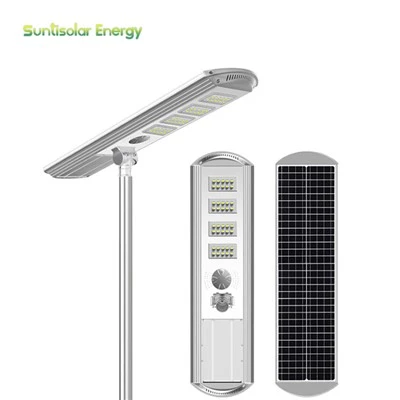
In conclusion, solar street lights can indeed be used in mountainous areas. While there are challenges such as uneven terrain, extreme weather conditions, and limited sunlight availability, these can be overcome through technical solutions and proper installations. The advantages of energy independence, environmental friendliness, and low maintenance make solar street lights an attractive option for mountainous regions.
Solar Street Light If you are involved in a project in a mountainous area and are considering solar street lights, I would be more than happy to discuss your specific needs. Our team of experts can provide customized solutions to ensure that the solar street lights meet the unique requirements of your location. Feel free to reach out to us to start a procurement discussion about how we can brighten up your mountainous area with our high – quality solar street lights.
References
- "Solar Energy in Challenging Terrain: A Global Perspective", International Renewable Energy Agency
- "Mountainous Region Infrastructure and Lighting Solutions", Journal of Mountain Engineering and Technology
- "Case Studies of Solar Street Light Installations in Remote Areas", Renewable Energy Research Institute
Yantai Xutai New Energy Technology Co., Ltd.
Yantai Xutai New Energy Technology Co., Ltd. is one of the most professional solar street light manufacturers and suppliers in China. With a professional production team, we are able to meet the needs of the majority of our customers. Please rest assured to buy premium solar street light made in China here from our factory.
Address: No.229, Tongshinan Road, Zhifu District, Yantai City, Shandong Province, China
E-mail: Joe.chu@suntisolar.com
WebSite: https://www.suntisolar.com/
