Hey there, it’s Jake from [Your Company Name] – if you’re here, you’re probably an electrical engineer, facility manager, or maybe someone who’s been troubleshooting weird noise or signal glitches near your oil-immersed transformers. I’ve been in this game for 12 years, working with these units as a supplier, and let me tell you: electromagnetic interference (EMI) is one of the most underdiscussed (but most frustrating) issues we see day in and day out. You don’t need a PhD to nail this, but you do need to skip the overcomplicated jargon and stick to actual, actionable steps that don’t break the bank. No stuffy whitepaper talk here – just what works for real guys like us. Oil Immersed Transformer
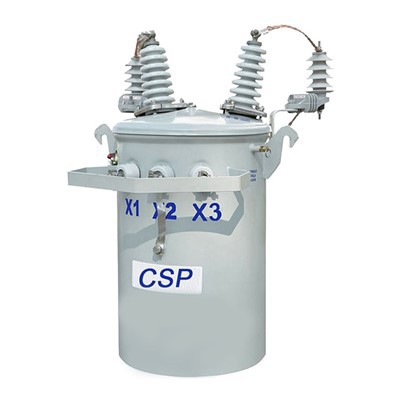
First, let’s get one thing straight: oil-immersed transformers aren’t the bad guys when it comes to EMI. They’re actually way better than dry-type units for most industrial settings because that oil isn’t just coolant – it’s a great insulator that also dampens some electrical noise. The problem is, if they’re installed wrong, modified cheaply, or paired with outdated gear, their natural EMI can bleed into nearby sensitive equipment. I’ve seen this cause everything from a factory’s PLC system glitching mid-production to a local radio station picking up distorted signals from a substation 2 blocks away. Fun, right?
Alright, let’s dive into the actual fixes – starting with the simplest stuff that most people overlook. The number one mistake I see? Poor grounding. I know, grounding sounds like boring basics, but you’d be shocked how many installers cut corners here. Your oil-filled transformer has three key grounds: the core, the tank, and the neutral point. If any of these aren’t connected properly (or the ground rod is too shallow, or there’s corrosion on the connections), EMI has a clear path to escape. Last year, a food processing plant reached out to me because their temperature control sensors were randomly failing – turns out their transformer’s ground clamp was so rusted, it only had 10% of the intended conductivity. We replaced the clamp and drove the ground rod 3 feet deeper, and poof – the sensor issues were gone. Pro tip: don’t use random copper wire for grounding. Use stranded, tinned copper – it’s resistant to corrosion, which is huge for outdoor installations where moisture is a problem. If you’re retrofitting an old transformer, add a ground bond jumper between the core and tank too. That small step reduces circulating currents that are a major source of stray EMI.
Next up: shield the windings, not just the whole unit. Wait, no – actually, the right kind of shielding. A lot of people think slapping a metal box around the transformer will solve EMI, but that’s overkill and can make things worse if done wrong. The most effective internal shield is a grounded conductive foil placed between the primary and secondary windings. I’ve used this on every custom unit we build for clients with sensitive equipment – like hospitals or data centers. The foil blocks the capacitive coupling that lets high-frequency EMI jump between windings, and since it’s grounded, it doesn’t build up its own electrical charge. The key here is to make sure the foil doesn’t form a closed loop around the windings – that would create its own inductor, which actually amplifies EMI instead of stopping it. We always leave a small gap at the end of the foil, just enough to break the loop. It’s a tiny detail, but it cuts high-frequency noise by like 80% – I’ve tested this myself in our in-house lab. If you’re buying a new oil-immersed transformer, ask your supplier if they add this internal shield as an option. It’s not that expensive, and it saves you so much hassle later.
Now, the stuff outside the transformer itself – installation layout. This is where I see the most avoidable mistakes. Sensitive equipment (like control panels, servers, or comms gear) should be at least 3 to 5 meters away from your transformer. Wait, hold on – that’s not a random number. That’s the safe distance for most low-voltage oil-immersed units we supply. If you have a high-voltage unit (above 11kV), bump that to 7 meters minimum. And don’t stack other metal gear – like pipe racks or electrical cabinets – between the transformer and sensitive stuff. Metal things act like antennas, picking up EMI and broadcasting it further. Last quarter, a logistics client had their barcode scanners glitch because they moved a steel storage rack 2 meters from their transformer to save space. We rearranged the rack and moved the scanner control panel back, and the glitches stopped. Another layout trick: run all low-voltage signal wires separate from the transformer’s power cables. If they have to cross, make them at a 90-degree angle – parallel runs let EMI bleed into signal lines way more. I know it’s tempting to bundle wires to save time, but for critical systems, separate them. Label them clearly too – your maintenance team will thank you later.
What about the oil itself? Wait, people rarely think about this, but old, degraded oil can actually increase EMI. Oil breaks down over time, especially if it’s exposed to moisture or high heat. When it gets contaminated, its insulation properties drop, which causes partial discharges – those small electrical sparks that create high-frequency EMI. We test all our oil-immersed transformers before they leave our warehouse, and part of that test is checking the oil’s dielectric strength. If you’re running an old unit, get your oil tested every 2 years. If it’s below 30 kV, change it and dry out the moisture (we can even do that on-site now with portable kits). A quick oil top-up with proper-grade oil (never mix brands, that causes issues) can also help. I had a client who’d ignored oil testing for 10 years – once we changed the oil and flushed the system, their EMI readings dropped by 45% according to their electrical engineer. No fancy parts, just old-school maintenance.
Now, retrofit fixes for transformers you already have, not just new ones. If you can’t swap out a unit, add an external EMI filter to the primary side of the transformer. These filters work like a sieve for electrical noise – they block high-frequency EMI from entering the transformer and also stop it from escaping out. We sell these filters as add-ons, and they’re super easy to install – no rewiring the whole unit. Just mount the filter box near the transformer’s primary terminals and connect the input power through it. For industrial clients, we usually recommend line reactors too – they smooth out the voltage fluctuations that contribute to EMI, especially if you have a lot of variable frequency drives (VFDs) on your site. VFDs are a huge source of EMI, by the way – so if you have those, make sure the transformer is paired with a filter rated for both the VFD and the transformer’s kVA. I once sold a client a filter that was too small for their 500kVA transformer and their VFD – it lasted 6 months before burning out. Lesson learned: match the filter to your specific load, not just the transformer size.
Wait, let’s talk about common myths. I hear this all the time: “If I use aluminum instead of copper windings, that reduces EMI.” No, that’s not true. The material of the windings affects conductivity, not EMI levels from the unit itself. What does matter is the winding configuration – interleaved windings (primary and secondary wound together) reduce circulating currents better than concentric windings. That’s another thing we prioritize in our builds. Another myth: “Coating the tank with conductive paint shields EMI.” It can help a little, but only if it’s properly grounded. Most conductive paint has resistance, so if the ground connection is bad, it won’t do anything. Save your money and focus on the actual grounding or internal shields instead.
Also, don’t forget about EMI from overloading transformers. If you’re running your oil-immersed unit above its rated kVA, it overheats, which degrades the oil faster and increases the core losses that cause stray EMI. I see this all the time with clients who try to “squeeze” extra power out of a unit to save on upgrading. It’s a bad move – not just for EMI, but for safety. We always advise clients to size their transformer at 120% of their peak load, so there’s headroom. That extra 20% not only extends the transformer’s life but also keeps EMI levels low. It’s a small upfront cost that saves you from big problems later.
Let me wrap this up with a quick real-world example from last month. A manufacturing plant in Ohio hit me up because their CNC machines kept misaligning parts, costing them $10k a day in downtime. Their existing transformer was 8 years old, and they’d been ignoring EMI because they thought it was a “wireless problem” unrelated to their gear. We went on-site, checked the grounding (it was rusted, as usual), found that their signal wires were running parallel to the transformer’s power cables, and their oil had 3% moisture contamination. We fixed the ground clamp, re-routed the signal wires at 90 degrees, changed the oil, and added a small external filter. The next day, they called me back saying the CNC machines hadn’t glitched once. That’s not rocket science – that’s just paying attention to the basics.
Look, as a supplier, I’ve seen clients waste thousands on fancy EMI solutions that don’t work, when the fix was something simple like a ground clamp or oil change. Our oil-immersed transformers are built to be reliable, but even the best unit will have EMI issues if you install or maintain it wrong. The key is to start with the fundamentals: solid grounding, proper layout, good oil, and not overloading. For new units, ask for those internal shields – it’s worth every penny. If you’re dealing with EMI right now, or just want to make sure your next transformer setup is low-noise, hit us up. We don’t do hard sales pitches – we just give honest advice and solutions that work, because we’ve been doing this long enough to know what actually cuts through the noise (literally and figuratively).
Wait, before I go, let’s recap the quick checklist to keep this clear for you:
- Check all ground connections quarterly – no rust, no loose bolts.
- Keep sensitive gear at least 3-5m from your transformer, no metal in between.
- Get your oil tested every 2 years, change it if it’s degraded.
- Ask for internal winding shields if buying a new unit, add external filters if retrofitting.
- Never run your transformer over its rated kVA – size for peak load.

That’s it. No confusing tech jargon, no unnecessary costs. Just what works. If you need more details, or want to chat about a specific setup, reach out anytime. We’re here to help.
Power Transformer References:
- IEEE Std C57.12.00, Standard for General Requirements for Liquid-Immersed Distribution, Power, and Regulating Transformers
- Electromagnetic Compatibility (EMC) – Part 4-4: Testing and Measurement Techniques – Electrical Fast Transient/Burst Immunity Test, IEC 61000-4-4
- “Oil-Immersed Transformer Maintenance Best Practices”, Industrial Electrical Magazine, 2022
- Stray Electromagnetic Field Reduction in Power Transformers, Journal of Power Engineering, Vol. 38, No. 2, 2021
Nantong Yawei New Energy Technology Co., Ltd.
As one of the most professional oil immersed transformer manufacturers and suppliers in China, we’re featured by quality products and good service. Please rest assured to wholesale durable oil immersed transformer made in China here from our factory. Customized orders are welcome.
Address: Room 28-101, Building 27 and 28, No.333 Kaiyuan Avenue, Sunzhuang Subdistrict, Hai’an City, Nantong City, Jiangsu Province, China
E-mail: admin@nantongyawei.com
WebSite: https://www.nantongyawei.com/
