If you’ve ever wired a data center, a server rack, or even a small office network, you’ve probably stared at two options when it comes to short-haul connections: traditional optical transceivers and AOC modules. As someone who’s been selling AOC modules for the last 7 years—call me Jake, if you want, that’s what everyone in the industry calls me—I hear the same question all the time: “Are AOCs actually better than the transceivers my team’s been using for years?” The short answer? It depends, but for most short-distance use cases (think 2 meters up to 100 meters, which is 90% of the connections we deal with daily), AOC modules are often the smarter pick. Let me break this down like I would to a new customer walking through my office door, no confusing jargon, just what actually matters for your setup. Active Optical Cable Module
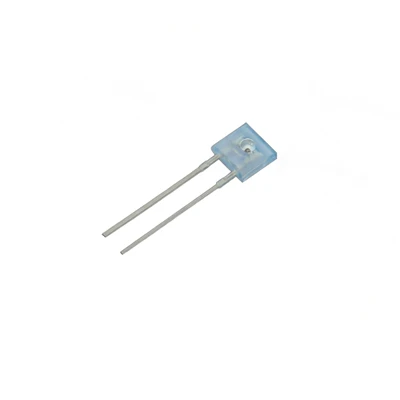
First, let’s get the basics straight for anyone who might not know: optical transceivers are those little hot-pluggable modules (like SFP+, QSFP, QSFP-DD) you slot into your switches, servers, or routers, and then you plug in separate fiber cables. Traditional ones use copper pins to connect to the device, and the optical side uses glass or plastic fiber, usually terminated with LC or MPO connectors. AOCs, on the other hand, are all-in-one: the transceiver and the cable are fused together at the factory, so you don’t have separate parts to match. No mixing and matching modules and cables, no fumbling with LC connectors that always get dusty right when you need them.
Let’s start with the big one for data centers and high-density setups: space and cable management. I’ve walked through dozens of data centers where admins are cramming 48 QSFP ports into a single 1U switch, and every millimeter counts. Traditional transceivers need extra room because they have that copper contact tab sticking out the back that plugs into the switch. AOCs? They’re slimmer on the device side because there’s no separate copper interface—they share the optical connection directly. I’ve seen teams swap out a stack of 48 transceivers and separate cables for AOCs and free up almost a full rack unit. That might not sound like much, but when you’re scaling a 10,000-port data center, every rack unit saves you hundreds in cooling costs and lets you add more servers without reconfiguring the entire cabinet.
Then there’s reliability. Let’s be real: fiber connectors are finicky. Even the cleanest data centers have dust, and a single speck on an LC connector can drop your link speed by half, or even kill it entirely. When you have separate transceivers and cables, you have twice as many connectors to clean, inspect, and replace. AOCs have only two connectors total (one on each end of the cable) instead of four: transceiver, cable end, and two device ports. And because they’re assembled at the factory, the splicing and termination is done with precision tooling, not a tech in a rush with a crimping tool. I had a customer last year who was swapping out 120 faulty transceiver-cable combos a month because of bad connectors; switching to AOCs cut that to 3 or 4. That adds up to way less downtime—no one wants to be patching links at 2 a.m. when a server farm goes down.
Cost? Wait, I know what you’re thinking: “AOCs are more expensive upfront, right?” Yeah, at first glance, a 3-meter AOC might cost $15, while a traditional transceiver plus a passive copper cable (DAC, that’s the other common option) is $8 total. But let’s do the math over a year. Take that same data center with 1,000 short links. Each traditional pair lasts about 18 months before a connector fails, so you’re spending $8,000 a year on replacements, plus the labor to swap them—usually $50 per failed link, that’s another $50,000 a year. AOCs? They last 5+ years on average, so you only buy them once, and the labor is almost zero because you plug and play. Over 2 years, that’s $16,000 for AOCs vs. $116,000 for transceivers and cables. Sure, upfront costs are higher, but total cost of ownership (TCO) is way lower. For smaller setups, too: a 10-link office network? You’re not spending $1,000 a year on failures, you’re spending $100, but even there, you’ll save time not troubleshooting bad connectors.
Wait, but what about when you need to reuse components? That’s where some people say transceivers win. If you have a transceiver that works with your 10G SFP+ ports, you can swap it out for a 10-meter fiber cable and still use the same module for a longer run. With AOCs, since they’re fused, you can’t reuse the module—you have to throw the whole cable away when you’re done. But how often do you actually reuse transceivers? Most people don’t move modules around—they buy a new one when they update their equipment. And for short runs, how long are you going to keep the same setup? Tech refreshes happen every 3-5 years, same as AOCs. By the time you’d want to reuse a transceiver, your AOC is already at the end of its useful life, so you’d replace either way. Also, if you do need a flexible option for multiple distances, most AOC manufacturers sell them in 1m, 3m, 5m, 10m, up to 100m, so you can get the exact length you need without extra parts.
What about performance? Let’s talk signal loss. Short runs (under 100m) don’t have huge signal loss, but every dB counts when you’re running 100G, 400G, or even 800G links. Traditional transceivers have a bit of extra loss from the separate connector, while AOCs eliminate that because the optical path is continuous. I’ve seen a 400G link drop by 10% of its speed when you use a cheap transceiver and a low-quality fiber, but a matching AOC will hit line rate every time. And power? AOCs draw less power than traditional transceivers. For a 1U switch with 48 ports, that’s about 10W saved per switch—add up 100 switches, that’s 1kW of power you’re not pulling from the grid. That’s not just good for your electric bill; it’s a big win for sustainability, which a lot of enterprises care about now for their ESG goals.
But wait, let’s be honest: AOCs aren’t for every short-distance use case. If you’re running a single 10G link between two laptops in a coffee shop, you don’t need an AOC— a cheap UTP cable works fine. If you need to run a link longer than 100m (like 200m between two buildings), you’d want a traditional long-haul transceiver, not an AOC. Also, some older equipment can’t support AOCs—super old switches that don’t recognize the hot-plug interface on AOC modules. But if you’re running any modern gear (post-2018, basically) and your run is 100m or less, AOCs will work. I’ve even seen them work for gaming setups where people run long fiber runs between a PC and a monitor, no lag, no signal dropouts.
Another thing I don’t hear enough about: clutter. Traditional transceivers and cables come with more parts, which means more trip hazards in a server room. AOCs are thinner and stiffer, so you can route them neatly along rack rails without the loose connectors tangling. I had one customer who said they used to trip over a loose transceiver cable every month, and since switching to AOCs, that stopped entirely. No more lost time fixing tripping hazards, no more broken ports because someone knocked a transceiver loose. This is a small thing, but it adds up to less maintenance.
Let me address the counterpoints I get all the time. First, “AOCs are less flexible than transceivers.” Yeah, if you need to mix and match different brands of transceivers and cables, but most data centers use all the same brand of switches, so matching modules and cables is standard. If you’re buying transceivers from brand A and cables from brand B, you might run into compatibility issues, but AOCs are tested to work with all major switch brands (Cisco, Juniper, Arista, whatever) right out of the box. Second, “I can get DACs cheaper than AOCs.” DACs are direct attach copper, which is different from AOCs—they’re copper cables that connect directly to transceivers. DACs work for very short runs (under 7m), but at 10m or more, copper has way more signal loss than fiber, so DACs can’t go that far without boosting the signal. AOCs use glass fiber, so they can run up to 100m without any signal loss, which is why they’re better for longer short runs.
So who should pick AOCs? If you’re a data center admin, a network engineer managing a medium or large office, anyone who deals with short links (1-100m) in high-density setups. If you’re a small business with a 10-port switch and 2m links between your router and servers, transceivers and a cheap DAC might still work, but even then, an AOC will save you headaches down the line when you scale up.
At the end of the day, the biggest advantage of AOC modules is that they solve almost all the small, annoying problems that come with traditional transceivers. No dusty connectors, no extra parts taking up space, fewer failures, lower long-term costs. They’re not perfect—if you need super flexible reuse for very short runs, or you have ancient hardware, they might not be the right fit—but for 90% of short-distance connections these days, they’re the better choice.

If you’re tired of dealing with flaky transceivers, downtime from bad connectors, or cable clutter, we can hook you up with custom-length AOC modules tailored to your setup, no hidden fees, no weird minimum orders. Shoot us a message and we can walk through exactly what you need, no sales pitch, just straight answers.
Optoelectronic Devices References
Optical Fiber Communications Principles and Practice, John M. Senior
Data Center Network Design and Implementation, Cisco Press
Active Optical Cables: Advantages for Short-Haul Data Transmission, IEEE Communications Magazine
Transceiver Power Consumption in High-Speed Networks, Journal of Optical Communications and Networking
Zhejiang Chengmei Technology Co., Ltd.
As one of the most professional active optical cable module manufacturers and suppliers in China, we’re featured by quality products and good price. Please rest assured to wholesale bulk premium active optical cable module made in China here from our factory. Also, quotation is available.
Address: No. 383, Jinhe Road, Qinshan Street Industrial Park, Haiyan County, Jiaxing City, Zhejiang Province
E-mail: shiwei@cm-semi.com
WebSite: https://www.cmfiber.com/
